

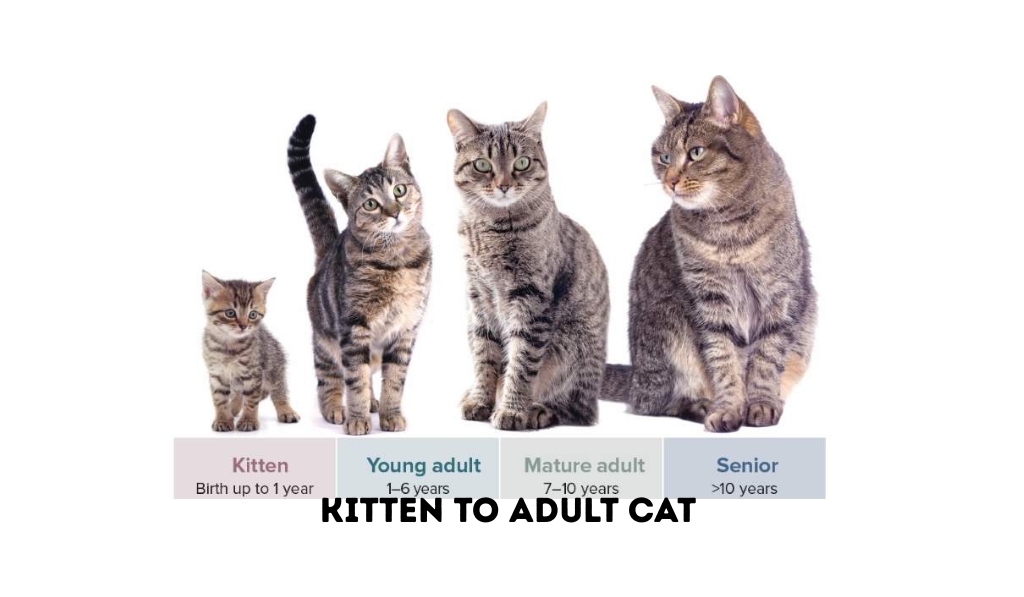
The experience of a small lump of fluff developing to become a full-fledged cat is one of the most gratifying experiences of being a cat parent. Yet at when does a kitten become a cat? The majority of kittens become adults at the age of about their first birthday but some larger breeds may go until 18 months or two years.
Learning about the Kitten to Adult Cat Transition
When a kitten is 12 months old, then he is an adult cat. Nevertheless, this schedule depends on the breed, genetics and developmental stages of individual. Giant breeds such as Maine Coons, Persians, etc. can take up to 15 to 24 months to become fully mature.
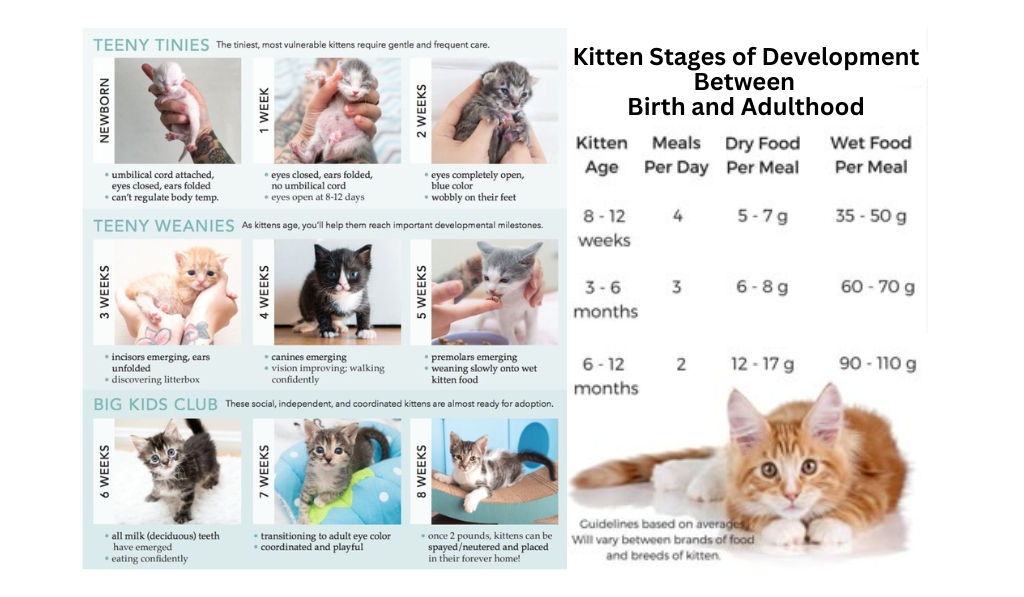
Kitten Stages of Development between Birth and Adulthood
Birth to 2 Weeks: The Neonatal Period
The kittens when they are born are fully reliant on their mothers. They are born blind and deaf and they use touch and smell to find their way about. At the conclusion of week two, their eyes open, but the vision is still blurry. It is at this sensitive stage that kittens learn to gain 10-30 grams every day and they need round-the-clock maternal attention.
2 to 4 Weeks: Early Development
Kittens attempt initial attempts to walk and stand at the age of two weeks. When they are 3 weeks old, their olfactory-sense is formed good enough though hearing is still getting better. The onset of physical change of the babies starts at 3-4 weeks when the first baby teeth start erupting.
Socialization Starts 4 to 8 Weeks
It is a vital stage through which kittens are likely to be more social and energetic. At around 4 weeks, they begin to eat solid food, and they are usually completely weaned at the age of 8 weeks. It is time to socialize, litter mates, mothers and even humans influence the future behaviour of this species. The eye-paw coordination will be developed quickly, and they will be more adventurous.
3 to 6 Months: Juvenile Stage
The kittens during these months undergo severe growth spurts. Between 3-6 months, they lose their milk teeth and get their adult ones. They sleep as mature cats (13-16 hours per day) and when they are awake they are as playful as dolphins. Kittens have grown to approximately 90 per cent of their adult size by the age of 6 months but are still filling out.
7 to 12 Months: Adolescence
In approaching the first birthday of kittens, there is a decrease in growth but it does not cease. When does a cat qualify as an adult? The one-year mark is generally the distinguishing point between veterinarians. Most cats are full grown and have acquired established personalities by the age of 12 months.
Feeding Guidelines by Age
| Age | Meals Per Day | Daily Food Amount | Food Type |
| 0-4 weeks | On demand | Mother’s milk/formula | Milk only |
| 4-8 weeks | 4-6 meals | 1/4 to 1/3 cup | Wet kitten food |
| 2-3 months | 4 meals | 1/3 to 1/2 cup | Kitten food |
| 3-6 months | 3 meals | 1/2 to 3/4 cup | Kitten food |
| 6-12 months | 2 meals | 3/4 to 1 cup | Kitten food |
| 1+ years | 2 meals | 1/2 to 3/4 cup | Adult cat food |
Temperature Requirements for Cats
| Age/Stage | Ideal Room Temperature | Body Temperature | Special Considerations |
| 0-2 weeks | 85-90°F (29-32°C) | 96-100°F (35-38°C) | Cannot regulate body heat |
| 2-4 weeks | 80-85°F (27-29°C) | 98-100°F (37-38°C) | Need warm environment |
| 4-8 weeks | 75-80°F (24-27°C) | 100-101°F (38°C) | Developing regulation |
| 2-6 months | 70-75°F (21-24°C) | 100.5-102.5°F (38-39°C) | Better heat regulation |
| 6+ months | 65-75°F (18-24°C) | 100.5-102.5°F (38-39°C) | Normal adult range |
| Adult cats | 65-75°F (18-24°C) | 100.5-102.5°F (38-39°C) | Fully regulated |
Factors That Influence When a Kitten Becomes a Cat
Breed Differences
The breeds of cats are not all mature at the same rate. Whereas domestic short hairs normally attain adult size allowing 12 months, Maine Coons may take 3-5 years before they mature completely. Siamese and Oriental breeds have a tendency to grow quicker whereas Persians and Rag dolls require more time to achieve the maximum growth.
Nutrition Impact
Good protein food that is of high quality has a vast impact on the growth rates. Compared to adult cats, kittens have high energy requirements, a high protein need, as well as particular nutrients that aid rapid growth. When one gets the right nutrition in the first year the base is laid on a lifetime of healthy living.
Effects of Spaying and Neutering
Sterilization has an impact on growth patterns and metabolism. The cats which are spayed and neutered at an earlier age can have a little longer than normal bones and will have lean bodies. Nevertheless, the chances of altered cats becoming obese are three times higher and therefore it is important to watch the number of portions consumed and exercise.
The Kitten Food to Adult Cat Food
When to Make the Switch
A majority of kittens are expected to be placed on adult cat food at the time of their first birthday. The larger breeds such as Maine Coons are expected to keep feeding on kitten food until the age of 15-18 months to sustain them in their lengthy growing period. Before you change your diet, you have to consult your veterinarian.
How to Transition Safely
Never switch foods abruptly. Gradual transition: Use this schedule of 7-10 days:
- Day 1-2: 75 per cent kitten food and 25 per cent adult food
- Day 3-4: 50 per cent kitten food and 50 per cent adult food
- Day 5-10: 100 per cent adult food
In case your cat is upset in his digestive system, slow down and lengthen the timetable.
The reason why Kitten Food is not Adult Food
Higher levels of are found in kitten food:
- Muscle building protein
- Energy-intensive growth calories
- Brain and eye developmental DHA
- Phosphorus and calcium to keep bones healthy
Cats that are adults do not require such high levels of nutrients. Feeding of cats beyond the maturity stage may cause obesity and other health related issues.
Physical Symptoms Your Kitten Is Growing into a Full Cat
Body Development
At one year old, your adult cat should have:
- Adult teeth developed fully (30 total)
- Strong skeletal structure
- Defined muscle tone
- Shiny, healthy coat
- Final adult size and weight
Behavioural Changes
Adult cats at an early age have more mature behaviours:
- Not so frantic playing, more tactical hunting
- Developed sleeping habits (12-16 hours per day)
- Grew to have a sense of territory
- Honed socialization skills towards human beings and other pets
- They are more predictable personalities
Health Issues at Various Age
First Year Health Priorities
Kittens require:
- Several immunisation sessions (6-16 weeks)
- Spaying or neutering (4-6 months)
- Parasite prevention
- Regular weight monitoring
- Dental care establishment
Young Adult Cat Care (1-2 Years)
The health demands of cats change when they are regarded as adults:
- Annual veterinary checkups
- Vaccinations of the type of around 14 months
- Weight management focus
- Dental examinations
- Baseline health screening
Do You Know whether a Cat is still a Kitten?
Physical signs are:
- The fine fur (vs. more coarse adult fur) is soft
- Greater proportionality of eyes and ears
- Weaker muscle structure
- Mixed dentition or baby teeth
- Energetic and perpetual joviality
Are There Sexual differences in the Maturity of Male and Female Kittens?
Male usually attains a larger size than females and they may take a little longer to achieve full size. Both genders attain sexual maturity at the age of 5-6 months although physical maturity remains far behind.
Other than Physical Maturity: Social Development
Although the physical development of kittens into cats takes place at 12 months, social maturity still forms until the age of 2-4. Cats at their young adult age are still trying to achieve the proper social behaviours, territorial limits, and communication abilities with cats of the opposite sex.
It is a long-term aspect of social development and, that is why it can be so difficult to introduce a kitten to an older adult cat. The interminable activity of the kitten and the immaturity of the social life can overpower a full-fledged cat which is fond of quietness and well-established habits.
Preparing Your Grown-Up Cat to Success
Exercise Requirements
On the one hand, it is necessary to keep adult cats physically active in order to keep them in good shape and to prevent mental stagnation. Use interactive play activities with daily play involving feather wands, puzzle feeders, and interactive play to make your cat both mentally and physically healthy.
Environmental Enrichment
Provide your adult cat with:
- Several scratching posts and cat trees
- Bird watching window sills
- Hiding spaces and cozy beds
- Interactive food puzzles
- Constant change of toys to avoid boredom
Continued Socialization
Cats are positively reinforced even when they are mature. Your adult cat should also be socialized through further handling, grooming and being exposed to different situations at home so as to keep them on the positive side of a personality that is confident and sociable.
Frequently Asked Questions
Q1: At what age is a kitten considered a cat?
A: At the age of 12 months, kittens are recognised as full grown cats. More massive breeds such as Maine Coons might not become fully mature until the age of 15-24, though. With the help of this milestone, veterinarians calculate the dietary requirements and healthcare needs.
Q2: How long is a cat a kitten?
A: The cats are regarded as kittens until about a year old. The first year entails a high rate of physical growth, development of behavior and socialization. They take the first birthday and move on to the young adult stage till approximately age 2.
Q3: When are cats considered adults?
A: Most breeds of cats are one year old when they mature. Their physical maturity is achieved at a time when they have grown to an estimated adult size of 80-90% which is usually at 9-12 months. Big breeds take as long as 18 months to 2 years before maturing fully.
Q4: Can I still feed kitten food to a 1 year old cat?
A: No, you need to put her through adult cat food about the time of their first birthday. Feeding of kittens leads to excessive weight gain due to the high number of calories and fats contained in the food as compared to that of adult cats. Switching should be done over 7-10 days to prevent digestive disturbances.
Q5: Will male cats kill kittens?
A: Unneuted male cats (toms) can act aggressively towards kittens particularly not their own. Nevertheless, most of the neutered male cats are safe with the kittens. Introductions and supervision are necessary when taking a kitten to the house where adult cats are kept.
Q6: What are signs your cat is accepting a new kitten?
A: Good behavioural indicators are the ability to lean toward the kitten, groom together, play with the kitten without roughness, eat with him or her without tension, and the adult cat teaching the child boundaries without being overly aggressive. It may consume a few weeks or months.
Q7: Should I get a kitten if I have an adult cat?
A: This will be based on the personality of your adult cat, his age and energy level. Older cats (11-12 years old and above) tend to be quiet and non-aggressive cats rather than playful kittens. An adult cat with equal energy can be a more suitable match to that of a kitten, which has a lot of energy.
Q8: What About Mixed Breed Cats?
The average age of cats of mixed breed is approximately 12 months of age. Not sure of what your cat is a mix of, your veterinarian can give an approximation of the size they are expected to grow to and when they are likely to mature, according to the current development.