

When you keep a cat and a dog at home, you have most likely caught your cat several times trying to steal the bowl of the dog.
It is among the most popular issues that pet owners ask themselves, and the question is straightforward: can cats eat dog food?
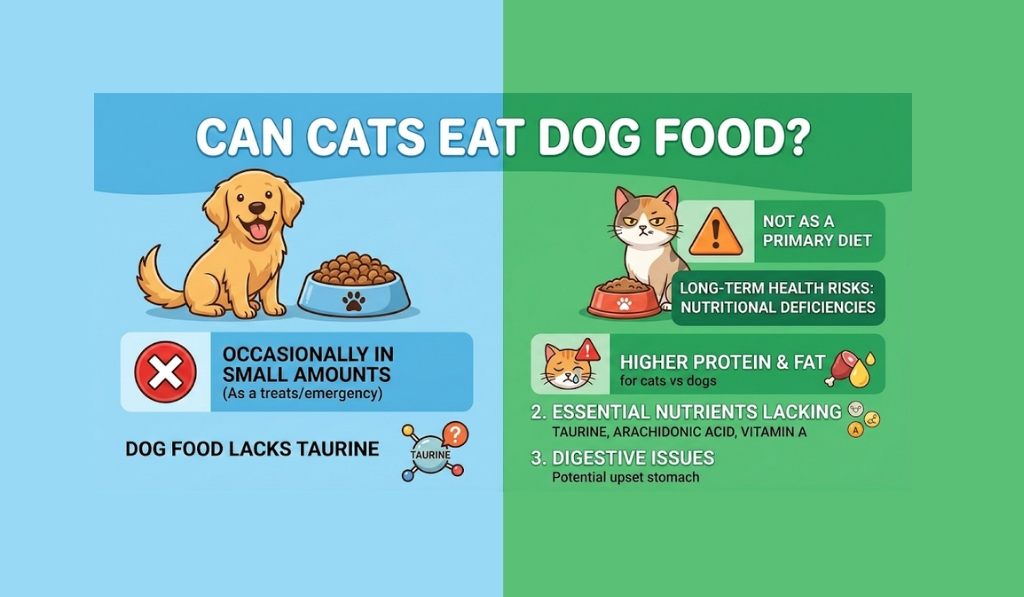
The answer to this is in the short run, yes, a cat can physically be fed dog food; however, this does not imply that it is safe or healthy for them.
Realising the reason is very important when you wish your cat to have a long and healthy life.
The Reason Cats and Dogs Have Totally Different Nutritive Requirements
Dogs are omnivores. They are able to digest plant and animal foods, and their organisms have evolved to digest a large number of nutrients.
The cats are, however, obligate carnivores. That expression implies that their biology is programmed to absorb almost all the necessary nutrients exclusively through animal meat.
This difference is not a trivial one. It is a natural biological difference that defines all aspects concerning the functioning of the digestive system in cats and which nutrients their body could synthesize internally and what had to be supplied by their food.
Dog food is developed to address the nutritional requirements of dogs and not cats. Even good and expensive dog food cannot fulfill the needs of a cat to remain healthy. Regular feeding of cat food to dogs also can result in severe deficiencies in the long run.
Major Nutrients Missing in Dog Food Cats Require
Taurine
Taurine is a protein amino acid that is nearly exclusive to animal protein. Cats have low levels of taurine that they cannot synthesize, and thus they have to obtain it through food daily.
Dog food has a very low amount of taurine since the dogs can make it internally.
When a cat is fed dog food on a regular basis and is updated with a low content of taurine, then it is likely to develop dilated cardiomyopathy (a severe heart disorder), blindness, and reproductive failure.
Arachidonic Acid
Cats are unable to synthesize arachidonic acid, which is one of the necessary fatty acids. Dogs can. It is not usually contained in dog food in significant amounts.
The absence of sufficient arachidonic acid poses challenges to the skin condition, kidney, and reproductive health of cats.
Vitamin A
Dogs are able to do the conversion of beta-carotene to vitamin A, which cats are not capable of whatsoever. They require ready-prepared vitamin A, and this is directly derived from animal tissue like liver.
Dog food often relies on plant-derived vitamin A precursors that a cat’s body simply cannot use.
Protein Content
The percentage of protein required by cats in the diet should be much higher than that required by dogs. Average adult cat food has a protein content of approximately 30 to 45 percent on a dry matter basis.
Dog food is commonly much less than that. A cat fed on dog food will fail to obtain sufficient protein to sustain muscle mass, immune responses, or organ well-being.
Niacin (Vitamin B3)
Cats, just like taurine, are unable to generate enough niacin internally. To provide it, they look to the animal tissue. Its formula of dog food is not subjected to the same standard of niacin as cat food.
What Would Happen in the Event a Cat Eats Dog Food?
One or Two Bites: Mostly Fine
When your cat once consumed dog food or even just sneaked in a few bites out of the dog bowl, then there is usually no need to run panicked.
One spoon of dog food will not do any immediate harm. Some cats may have a slight case of digestive upset, which includes loose stools or a slightly distressed stomach, which generally resolves on its own.
Eating Dog Food for a Few Days
Does this mean that cats can eat dog food after two days in case of an emergency?
This is doable in the short run. When the cat food is finished and there is a short interval before you can replenish its stocks, dog food does not bring permanent harm to a healthy adult cat.
Never more than a day or two should it last, though. In times of emergency even plain cooked chicken or water-canned fish should be a better temporary alternative.
Long-Term Feeding: Health Hazards
This is where the actual threat is. A cat that feeds on dog food as its main meal for several weeks or months will become deficient in nutrients. The worst are:
- Heart disease caused by taurine deficiency
- Poor sight
- Disheartened condition of the coat
- Weight loss after eating
- Wastage of the muscles
- A weakening of the immune system
These aspects may be hard to undo once they establish themselves.
Cat Food vs. Dog Food: Key Differences at a Glance
| Nutrient/Factor | Cat Food | Dog Food |
| Taurine | Required, always added | Not required |
| Protein content | High (30-45% dry matter) | Moderate (18-26% dry matter) |
| Arachidonic acid | Included | Often absent |
| Vitamin A source | Performed (animal-based) | Often beta-carotene (plant-based) |
| Niacin levels | Higher to meet cat needs | Lower, relies on internal synthesis |
| Carbohydrate levels | Generally lower | Often higher |
| Caloric density | Higher per serving | Varies, often lower |
Can Kittens Eat Dog Food or Puppy Food?
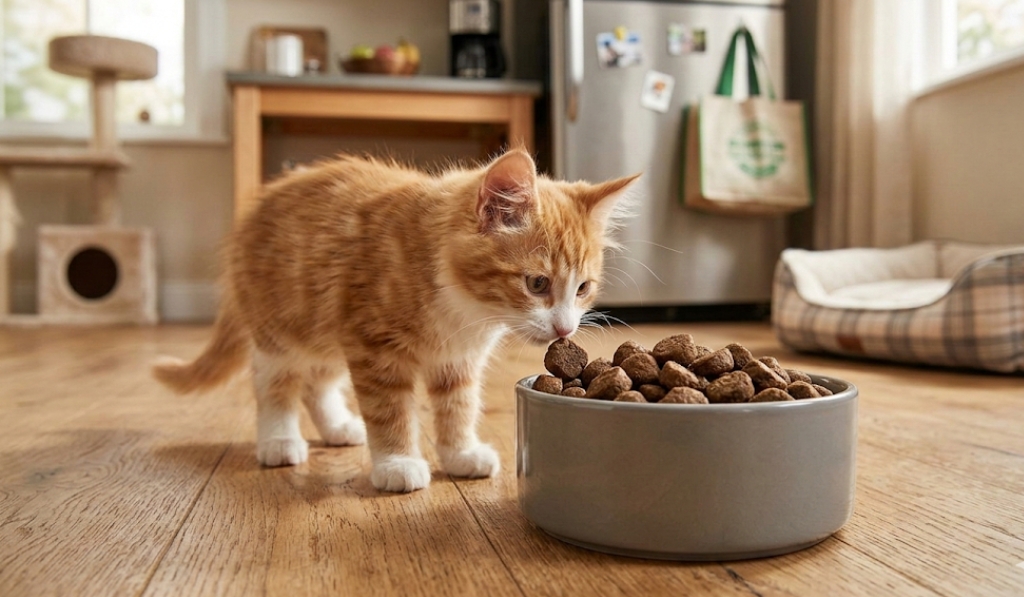
Kittens require even greater nutritional needs as compared to adult cats. They are developing fast and require high concentrations of protein, taurine, and DHA to develop the brain and energy.
Puppy food is nowhere near the requirements of the kitten. Providing a kitten or dog with food, including puppy food, will hamper their growth and precondition the onset of long-term health problems in the future.
Always give kittens food with “kitten” written on it.
Why Does My Cat Keep Eating the Dog’s Food?
Cats are opportunity feeders. They are nosey and food-driven and in most cases would be drawn to the smell of dog food that is often prepared to be highly meaty.
Other cats are more attracted to dog food than to theirs (and especially to wet dog food), which has a delicious gravy-like odor.
Your cat is not stubborn or picky. It is just an attraction to them. The answer is to feed pets in different rooms, where necessary, and in between meals to remove the bowl of the dog so that your cat does not have it.
Is it Safe to Feed Cats Dog Food as a Long-Time Diet? The Verdict
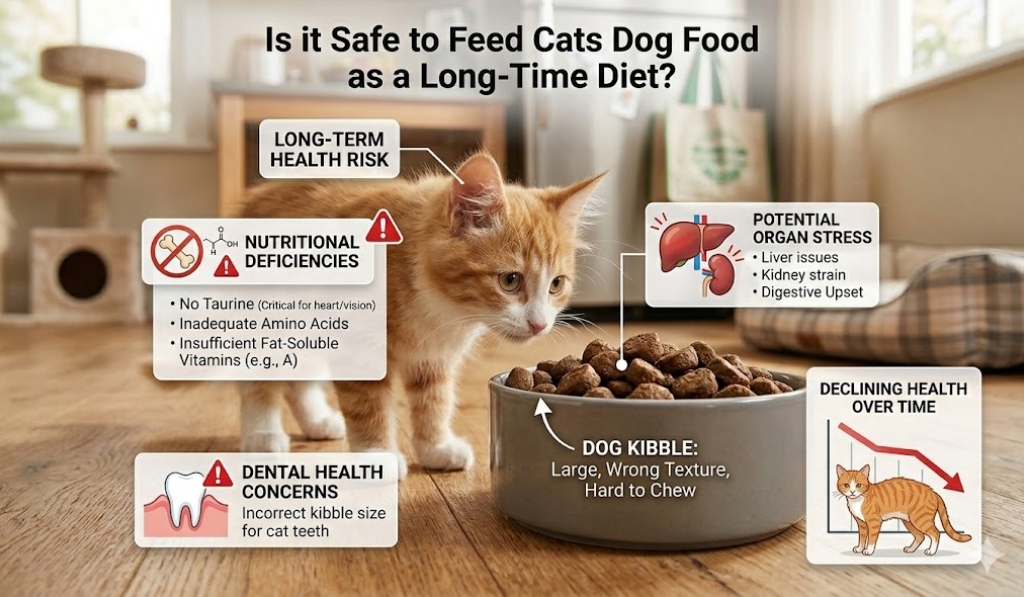
And coming back to the main question one more time with the help of the main keyword, can cats eat dog food? It is not going to hurt them?
Only in the very short term. Dog food is really hazardous to cats as a long-term diet. It does not contain the definite amino acids, fatty acids, and vitamins the cats need to get in the food since their bodies are not able to produce them on their own.
There is no food available, dog wet or dry, that will replace the nutritionally complete cat food.
Speak with your veterinarian in case you are not sure that your cat is getting the nutrition it requires with its present diet. Reviewing a diet is an easy measure that would save a person serious health issues in the future.
Conclusion
Cats are special creatures whose diet is not similar to that of any other pet kept at home. Although dog food will not hurt your cat during one sitting, it is neither a safe nor a right food to give to your cat.
It lacks the nutrients that it does, and the nutrients that it does not get are not optional, especially taurine, vitamin A, arachidonic acid, and sufficient protein. They are meant to be vital to the heart of your cat, its sight, its hair, and its health.
Give your cat a specifically designed cat food that is labeled as cat food, use different food bowls in multi-pet households, and visit your vet when your cat has been regularly fed on dog food over a long period.
It is on you to make the right call, and the right call in this case is not ambiguous and is your cat.
In case you found this article useful, you can share it with another fellow owner of pets who has both cats and dogs at home. It would do some good to their animals.
Frequently Asked Questions
Can cats eat dog food in an emergency?
One or two days of dog food will not really do much harm to a healthy adult cat. Nonetheless, raw cooked chicken or raw canned fish in water is a less risky emergency choice.
Dog food must never be kept more than 48 hours, and it should be replaced by appropriate cat food as soon as possible.
What happens if a cat eats dog food regularly?
In the long run, a cat that has a diet of cat food as its primary diet will suffer severe nutritional deficits.
Taurine deficiency is the most harmful, and it may lead to heart disease and blindness. The shortage of proteins may also result in the loss of muscle, loss of weight, and a compromised immune system.
Can kittens eat dog food or puppy food?
No. Kittens need extremely high protein, taurine, and DHA nutrients when growing up healthy. Puppy food fails to satisfy these needs.
Kitten dogs may be stunted in growth by feeding them food that will cause developmental complications. Always make sure to use food with “kitten” written on it.
Why does my cat keep eating the dog’s food?
Cats like dog food, particularly that of the wet nature, which carries strong meaty smells that they find appetising.
Cats are generalists and will explore any food source around. The solution is easy: feed pets separately and clean up the bowl of the dog after meals to ensure that your cat cannot get the bowl.
Is wet dog food worse for cats than dry dog food?
Wet and dry dog food are no different since neither can be considered a suitable long-term diet for cats.
Neither of them includes the right amounts of taurine, protein, and other cat-specific nutrients.
Wet dog food can also result in slightly faster digestive dysfunction in certain cats as a result of various moisture and fat contents, although neither can be fed often.
Can cats eat dog treats?
The occasional dog treat is not likely to be harmful, but the dog treats are not designed to match the cats and do not serve them with nutritional value.
The dog treats may also have garlic or onion powder, and this is poisonous to cats even in little quantities. A dog treat should never be given to your cat without first glancing at its ingredient list.
How do I stop my cat from eating the dog’s food?
Do not free-feed your pets, but feed them on schedule. Put bowls into different rooms or put on a pet gate.
Take the bowl of the dog away immediately after the dog is done with his food. Other pet owners adopt the microchip-activated feeders wherein the door opens only to the registered pet, and this is a very effective solution in long-term cases.