

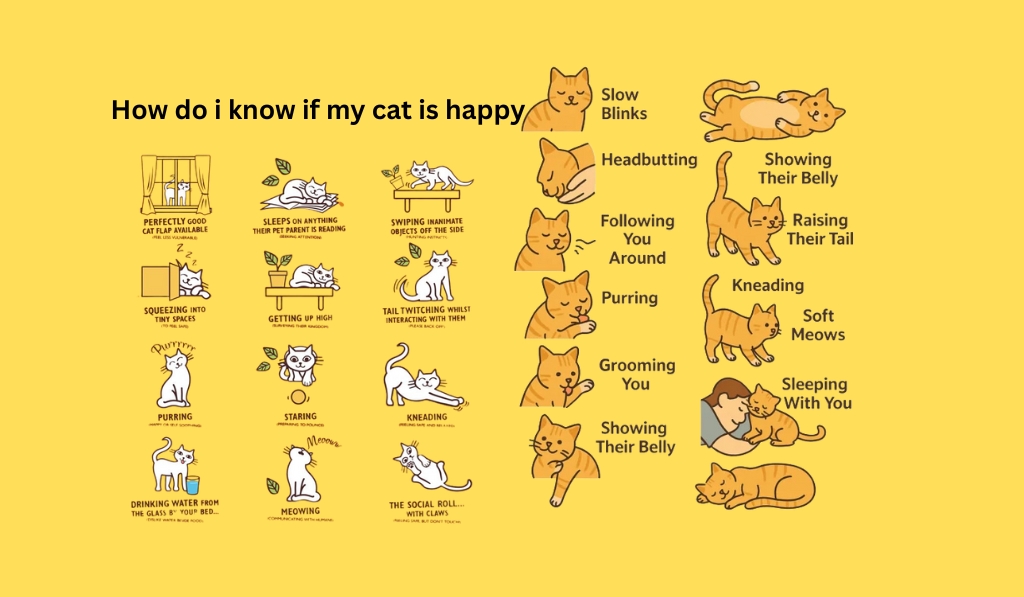
It is not always easy to know whether your cat is happy or not. As opposed to dogs who have their feelings on the sleeve, happy cats express their feelings in their invisible body language that most owners overlook. To be able to read these signals will make you less worried that your feline friend is not very happy.
Happy Cat Body Language: What This Means
The indicators of cat happy manifestation include a number of physical signs. Then, you will be able to better react to the needs of your cat and improve your relationship when you are aware of how to determine whether a cat is happy or not.
Tail Talk: The Happiness Indicator Par excellence
The tail of a cat is their emotional thermometer. Happy cat body language has certain tail positions which indicate contentment. When your cat stands in the air with the tail straight as with a small twist at the end, your cat is saying good morning to you in the finest manner. Such a stance is an indication of confidence and friendliness.
There is a fidgeting erect tail indicating a high degree of excitement especially when your cat has not seen you in a long time. But do not mistake this with a bristled, puffed-up tail, a sign of fear or aggression.
| Tail Position | What It Means | Your Response |
| Straight up with curl | Happy, confident, friendly | Good time for interaction |
| Question mark shape | Playful mood | Grab a toy! |
| Wrapped around you | Affection and trust | Return the affection |
| Low or tucked | Anxious or fearful | Give space and remove stressors |
| Puffed up | Scared or threatened | Back away, check environment |
The Eyes Have It: Reading Feline Expressions
Cat eyes under relaxation are unlike those under stress. One of the most obvious expressions of a happy cat is the slow blink or what many people refer to as a cat kiss. During the moment when your cat looks at you and blinks slowly then they are showing trust and affection. Support this gesture by blinking slowly back.
When relaxed, happy cats have soft and slightly closed eyes. Their students do not have a pupil that is larger. On the other hand, when the pupils are dilated and the body posture is tense this means that the person is stressed or over stimulated.
Ear Positions Reveal Mood
Pointing ears on the head are an indication of a happy, grinning cat. This is a neutral state that indicates that your cat is at home. When the ears run sideways or are flattened towards the head, you must give space to your cat at once.
Behavioural Indications of Satisfaction
Purring and Vocalizations
The purring sound is commonly known to most people as the happiest sound of the cat. Although purring usually shows contentment (especially when customers are being petted or snugged), cats will also purr when they are stressed or when they are sick. Context matters enormously. Happy cat purrs, shows other positive symbols: relaxed posture, soft eyes and comfortable sitting.
The sounds of chirruping or trilling can be used to show happiness and usually to invite you to follow your cat or play with him. When the meows are high and melodic, it is likely to mean that he/she is content, and when they are low-pitched, it may indicate his/her annoyance.
Kneading: Making Biscuits
Cats rhythmically pressing their paws in and out over soft surfaces (so-called making biscuits) are most content when they are doing so. This is an act that started during the kittenhood where kittens were kneading their mother to make their milk flow. Kneading is a behaviour of adult cats that show they are secure and loved.
It is also found that happy cats usually knuck blankets, cushions or even their favourite humans (they have sharp claws, however!). This act of pleasure triggers endomorphins and forms an occurrence of happiness feedback.
The Social Roll
When your cat comes up to you and lays on his back and exposes his unguarded belly, he is exhibiting much trust. This action of a happy cat implies that they are perfectly safe. But do not succumb to the temptation to rub their belly most cats interpret this as a form of trust but not solicitation to rub tummy.
Grooming Habits
An amiable cat keeps to a high standard of grooming. Cats who groom themselves in conspicuous places are comfortable and self-confident. They can even bathe other pets of the family or even strive to groom you with soft licks.
Periodic grooming of the body makes their coat shiny and healthy. There should be a sudden alteration in grooming whether it is neglect or over-grooming, to be taken to the veterinary because this is usually an indication of stress or disease.
Table: Quick Reference Happy Cat Signs
| Category | Happy Signs | Unhappy Signs |
| Body Posture | Relaxed, stretched out, rolling over | Crouched low, tense, hunched |
| Tail | High with curl, gentle swaying | Tucked, thrashing, puffed |
| Ears | Forward, upright | Flattened, sideways |
| Eyes | Soft, slow blinking | Wide, dilated, staring |
| Activity | Playful, exploring, greeting | Hiding, withdrawing, avoiding |
| Grooming | Regular, thorough | Neglected or excessive |
Daily Habits of Happy Cats
Healthy Appetite
Is my cat happy? Check their eating patterns. Happy cat ensure that they have regular appetites and are enthusiastic at meals. When hungry, they can rub on your legs, meow or even stand in front of their food bowl and guide you there.
Alterations in diet eating habits such as eating less or overeating compulsively are some of the changes that may be indicative of underlying problems that need to be addressed by the veterinary.
Playful Behaviour
Play is a very important happy cat sign. Cats that are younger in age are more active in their play, such as sprinting, pouncing, and wrestling. The older cats will be interested in softer exercises such as hitting toys or playing quicker games.
A cheerful cat starts to play, either alone with the toys or in a game with other members of the family. Cats that completely shun play can be facing health complications or pressure.
Quality Sleep Patterns
Cats have a sleep of 12-16 hours in a day, yet the sleeping habits are important. Cats are the happiest sleepers: they lie in open postures, either on their backs or with the paws tucked up. They select different places to sleep and seem to be comfortable whilst taking a nap.
Burying oneself under the carpet or oversleeping a lot can be signs of stress or sickness and not of happiness.
Social Interaction Indicators
Seeking Your Company
Happy cats prefer to mingle with their humans. They are free to curl in your lap, sleep next to you, meet you at the door, or follow you in the house. Though cats are less needy as compared to dogs, they do require someone to stay with them when happy.
Although this is, of course, entirely normal, some cats would rather be around and not in direct contact. Much depends on voluntary closeness, but not avoidance.
Head Bunting and Rubbing
When the cats bang their heads on you or rub their cheeks on the furniture they are marking their territory using scent glands. This is referred to as bunting which indicates confidence and satisfaction. Marking is a common behavior of happy cats in their surroundings and other people they prefer.
Bringing “Gifts”
When you are presented with a toy (or sometimes a hunted prey) it shows your cat that he is happy and that he trusts you. They are telling their success in hunting to their family member- you!
It involves developing a Happy Cat Environment
Do you know whether your cat is happy? Ensure they have:
- Clean litter boxes (one litter box per cat and an addition one)
- Fresh water and quality cat food
- Climbing and observing vertical spaces
- Toys to scratch and to play with
- Secluded places to enjoy solitude
- Regular veterinary care
- Consistent routines
Indoor cats are especially helped by environmental enrichment. Perches and puzzle feeders on windows and rotational toys will eliminate boredom and encourage a healthy lifestyle.
When to Worry
In case your formerly comfortable cat has some alarming behavior (hiding all the time, aggression, change of appetite, or not grooming), make an appointment with a veterinarian. Cats are masters of hiding disease and therefore behavioral changes tend to give early warning signals.
Frequently Asked Questions
How can I tell if my cat is happy?
Basic good signs include an upright tail, forward-facing ears, calm body position, frequent grooming, good appetite, playfulness and asking to be your companion. A happy cat will exhibit a number of these signs at all times.
Do cats fur get softer when they’re happy?
Yes, happy cats are more considered with their grooming habits, and thus have softer and shinier coats. Stress usually makes cats forget about grooming and as such, the fur becomes duller and rougher. Frequent grooming signifies happiness and healthiness.
What does a relaxed cat look like?
A lazy cat would look easy and at ease. They could lie on their side or back with their tail extended or neatly wrapped around them. They have forward-facing ears, eyes that are soft/half closed and their entire body looks free of tension.
How do I know when my cat is happy with me?
Happy cats demonstrate the love by slow-blinking, purring when they interact, knead you, sleep near you, bring you toys, head-butt you and follow you. They eagerly want you to pay attention to them and they treat your company well.
Can cats be happy indoors only?
Absolutely! Outdoor cats have shorter healthier lives compared to indoor cats. How to tell whether my cat is happy at home: cats are expected to demonstrate all the signs of common contentment, be active and joyful, and to have positive habits. Enrich with toys, climbing structure and interactive play.
Is my kitten happy?
Happy kittens are very playful, and they are interested in the surrounding world, they like to eat, and they would like to play with people and other pets. They are expected to have good body languages and have healthy sleeping habits between the active-periods.
What makes an extremely happy cat?
A very happy cat has stable positive behaviours: is enthusiastic at greetings, purrs often, plays frequently, is an excellent eater, cleans himself, has good body posture, and is well bonded with its family members. They seem to be happy and interested in their surrounding.
Conclusion
The ability to know whether a cat is happy helps to enhance your relationship and give the best care. Happy cat body language Happy cat behavior as seen in tail positions to grooming will provide very easy access to the emotional state of your cat. Learning how to read the signs that a cat is happy will help you know that your feline companion is living his best life and you can deal with the issues before they get out of control. Remember, is my cat happy? The solution to this is to consider the entire scene of their day to day activities and posture.