

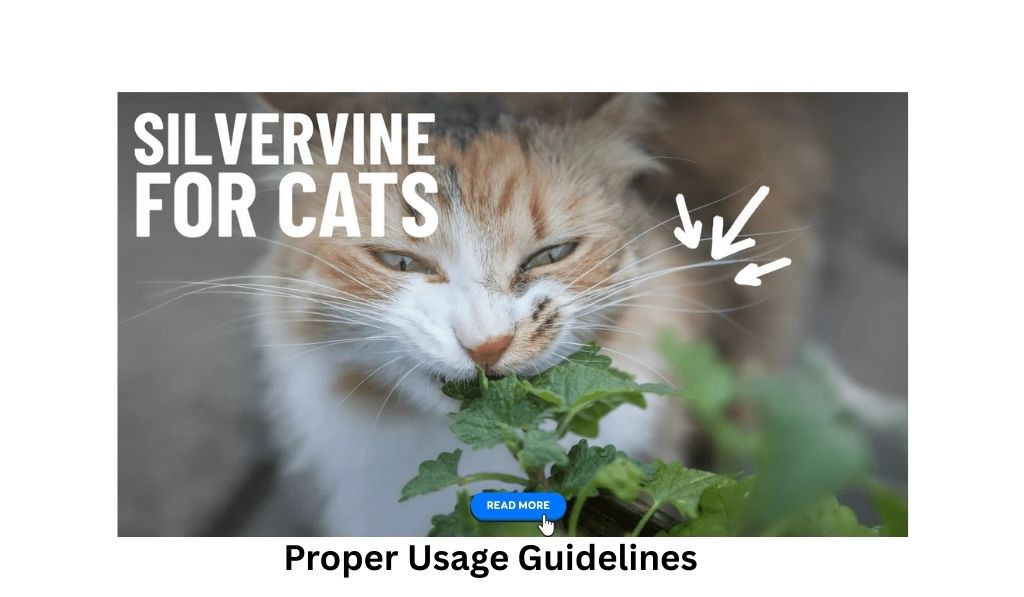
Silvervine may be something that your cat can really play with, in case you are seeking an alternative of catnip which will attract more cats. This is an ancient natural plant stimulant found in Asia and finally research has been able to validate what cat owners have come to know: is silvervine safe to cats and works better frequently than their traditional catnip.
What Is Silver-vine?
Silvervine (Actinidia polygamy) or matatabi or Japanese catnip is a climbing vine indigenous to the mountainous areas of China, Japan and Russia. This kiwi bird species is named so due to the unique silver white spots on its leaves.
The fruit is orange in colour and egg shaped having high amounts of vitamin C. Although humans have been using silvervine as traditional medicine, cats are attracted to it on totally different grounds. The gall fruit, which is fruit infested by insects, has the greatest amount of compounds that cats cannot resist.
Is Silver-vine Safe for Cats?
Yes, cats are safe with silvervine. The Pet Poison Helpline and Animal Poison Control Center have published no reports of toxicity or adverse reaction due to silvervine in cats. Scientific studies that were published in iScience confirm the fact that silvervine does not exhibit any addiction, stress, or liver or kidney toxicity.
Silvervine has the following safety features:
- Non-toxic: No threat of intoxication by the plant and its supplements.
- Non-addictive: Stimulates natural endorphin discharge, the absence of drugs addiction.
- No renal or liver damage: Blood tests indicate no organ stress.
- Short term effects: Disappears in 5-30 minutes and does not have long-term effects.
The sole safety issue is that of silvervine sticks. During the chewing, small fragments may detach, which may lead to choking or obstructions of the intestines. The silvervine chew sticks should always be monitored when your cat is being used and the small fragments should be disposed of as quickly as possible.
How Silver-vine Works on Cats
The active compounds of silvervine that develop the euphoric effect are actinidine and dihydroactinidiolide. When cats are exposed to them, they stimulate receptors in the olfactory tract that activate the amygdala of the brain and the hypothalamus which is the region of the brain that acts as an emotional and behavioral center.
A study carried out by Harvard University discovered another important ingredient to activate the reward and pleasure centers of cat brains; nepetalactol. This is a multi-compound action that is why silvervine is seen to have more effect on reactions compared to catnip.
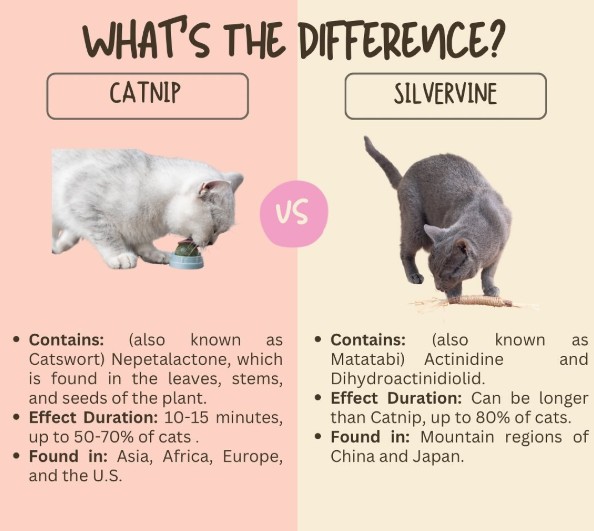
Silvervine vs Catnip: Which Is Better?
| Feature | Silvervine | Catnip |
| Response Rate | 80% of cats | 50-70% of cats |
| Active Compounds | Actinidine, dihydroactinidiolide, nepetalactol | Nepetalactone |
| Effect Duration | 5-30 minutes | 10-15 minutes |
| Intensity | Often stronger | Moderate |
| Best For | Cats that don’t respond to catnip | Traditional users |
Silvervine affects approximately 80% of cats, including 75% of cats that don’t respond to catnip. This higher response rate makes it an excellent alternative for picky felines. The dual-action compounds create more intense and often longer-lasting effects compared to catnip’s single active ingredient.
Benefits of Silver-vine for Cats
Physical Activity
Silvervine advances play, which assists cats to exercise their energy and stay in healthy weight. This is a natural stimulant which stimulates bursts of energy combat sedentary behavior to an indoor cat.
Stress Relief
The euphoric action will help alleviate anxiety in any stressful environment such as visiting the vets, relocation, or adding new pets. A large proportion of cats relax after the initial excitement process.
Dental Health
Silvervine chew sticks are considered to be natural tooth brushes. Chewing mechanically removes the tartar and plaque which helps to keep the teeth and gums healthy.
Mental Stimulation
Olfactory enrichment helps to avoid boredom and as well as make the necessary environmental stimulation to indoor cats. Silvervine programs improve general moods.
Can Kittens Have Silvervine?
Silvervine can be used in kittens above 6 months. The effect might not be that intense on younger kittens since their neurological pathways are in the process of development. Majority of cats would start responding to silvervine at the age of 6-12 months when they mature their olfactory receptors.
Kittens below the age of 8 months and pregnant cats are normally less responsive or not responsive to silvervine. It is a normal development and not a safety issue.
Silvervine Products in the Forms
Silvervine Powder
Powder Made of ground gall fruit or leaves, powder gives the most effective response. Apply 1/4 teaspoon on toys, scratching post or bedding. It is a convenient shape that is popular among cats who like smelling and rolling.
Silvervine Sticks
Natural matatabi sticks offer dentists and chewing pleasure. To release the fragrance, peel the bark and reveal fresh wood. Change when battered to avoid choking.
Silvervine Toys
Pre-stuffed toys are pre-measured and safe and convenient. These are effective with cats who do not like to chew but to cuddle and bat.
Silvervine Spray
Scratching posts and old toys are refreshed by means of liquid formulas. Spray a little and leave to dry and then serve to your cat.
Proper Usage Guidelines
- Start Small: Start with a pinch of powder or single stick to test reaction. Silvervine does not have the same effects on all cats.
- Moderate: Do not be exposed more than 2 times per week to avoid desensitisation. Excessive use may reduce performance as time goes by.
- Supervise Play: Cats should be monitored on the initial exposures and during chew stick use. Pay attention to the over stimulation or aggression.
- Routing: Playtime should not exceed 30 minutes. The effects naturally DE-condition and cats will go into refractory period which will not respond.
- Store Well: Silvervine should be stored in airtight containers without being exposed to light and moisture. The vacuum sealing keeps the potency longer compared to the ordinary ziplock bags.
Potential Side Effects
Although silvervine is relatively safe, there are cats who can develop:
- Constipation on large quantities.
- Temporary hyperactivity or hyperactivity.
- Drooling in the height of pleasure.
- Fatigue after excitement stage.
Such responses are physiological and temporary. Stop when your cat experiences distress, vomiting or unusual behavior of long duration.
Who Should Avoid Silvervine?
Silvervine does not generally do well with pregnant cats and extremely young kittens that are less than 6 months old. Cats with some medical conditions especially heart issues, nerve-related issues, or any chronic diseases must see a veterinarian before using silvervine.
Is Gall Fruit Safe for Cats?
Yes, cats are safe on gall fruit. Actually, the active compounds are produced in the highest concentration in silvervine gall fruit, and hence, it is the strongest form. The galls develop when insects hatch their eggs in the fruit and it cause a chemical process that is particularly appealing to cats.
To maximise the safety and effectiveness of the silvervine product, quality silvervine products are made using pure gall fruit, and leaves and stems are not added
Selection of Quality Silvervine Products
Look for products that are:
- Suggestive of 100% treatment and dye free natural.
- Obtained through well-established buyers.
- Fresh and strong natural aroma.
- Mold and free of contaminate.
- Prepared in plants where the quality is under control.
The ideal best silvervine sticks to use with cats must be clean, smooth and well dried to ensure they remain potent. Do not use products whose additives are artificial or whose coloring is questionable.
There is the Science of Silvervine Safety
In 2023, a study on the effects of continuous exposure to silvervine in cats was published. Blood tests revealed no elevation of stress measurements and hepatic or renal damages. This research has determined that dried silvervine leaves can produce the highest response in feline without any dependence, stress, or organ toxicity.
This scientific data proves the facts, which cat owners in Asia have been aware of all along: silvervine of cats is a safe, good enrichment.
Final Thoughts
Silvervine is cat safe and has a variety of advantages as a natural enrichment resource. It has an 80 percent response rate, and that means that it works with more cats than the catnip, so it is an excellent choice when the other stimulants do not work with the cats.
Always remember to use silvervine in small portions, playtime with chew sticks be supervised and the quality of products that are available be of good quality and reputable stores. You can choose silvervine powder, matatabi sticks or infused toys, but either way, your cat is able to safely enjoy this ancient Asian secret that is finally starting to get recognized in the rest of the world.
In need of the ideal cat silvervine product? To check the response of your cat, begin with a small pile of powder or a stick. You could simply give your cat its new favorite enrichment activity one that Asian cats have been enjoying over the centuries.
FAQs
Q: Is silvervine addictive to cats?
A: Silvervine is not addictive, No. It activates the natural secretion of endorphins and not the formation of external drug addiction. There are no withdrawal symptoms or compulsive seeking behavior of cats.
Q: How long do silvervine effects last?
A: Effects usually stay 5-30 minutes, different in individuals. Cat will be in a refractory phase after this period and will not react to further exposure during a period of about an hour.
Q: Can silvervine help anxious cats?
A: Yes, silvervine is a stressor and it can be used to relax nervous cat. The pleasure which is succeeded by the feeling of relaxation makes it applicable in the stressful moments such as travelling or visiting the veterinary.
Q: Why isn’t my cat responding to silvervine?
A: Approximately 20 per cent of cats are not genetically responsive. Age is also important kittens and very senior cats may not be so interested. Response rates are also influenced by freshness and potency of the product.
Q: Is silvervine safe for daily use?
A: Though it is not toxic, its daily use may cause desensitization. Exposure twice or thrice per week is ideal and effective in the long-term.
Q: What’s the difference between silvervine powder and sticks?
A: Powder is quicker and focused scent-based reactions. Sticks provide chewing and dental rewards. Select according to the preferences and play of your cat.
Q: Can multiple cats share silvervine?
A: Yes, but separate toys or spaces otherwise territorial behavior will occur. The cats are to have individual sources of silvervine to prevent any clashes during the play.
Q: Can Cats Eat Silvervine?
A: Although silvervine is not poisonous when taken orally, it is not to be used as food. There are those cats that will lick or eat small portions in the course of play, and this is not dangerous. Nonetheless, consuming several volumes can lead to stomach disorders.
Q: What Is the Frequency of Silvervine?
A: Silvervine should be used 2-3 times a week to be effective. When subjected to repetition on a daily basis, it would desensitize your cat and decrease their response in the long term.
Q: What If My Cat Doesn’t Respond?
A: Genetically, about 20% of cats do not react to silvervine. Use alternatives (powder or sticks) or wait till your cat grows up in case they are below 6 months.
Q: Silvervine Sticks- safe or not safe with cats?
A: Under supervision, silvervine sticks are safe. Choking on small pieces is the primary threat. Never leave sticks around, as soon as they can fit through the hole, take them out and dispose of them.
Q: Can Silvervine and Catnip Be Together?
A: Yes! There are products that are combined with catnip and silvervine to work better. Switching the two will help avoid boredom and will offer variation to the enrichment process of your cat.