

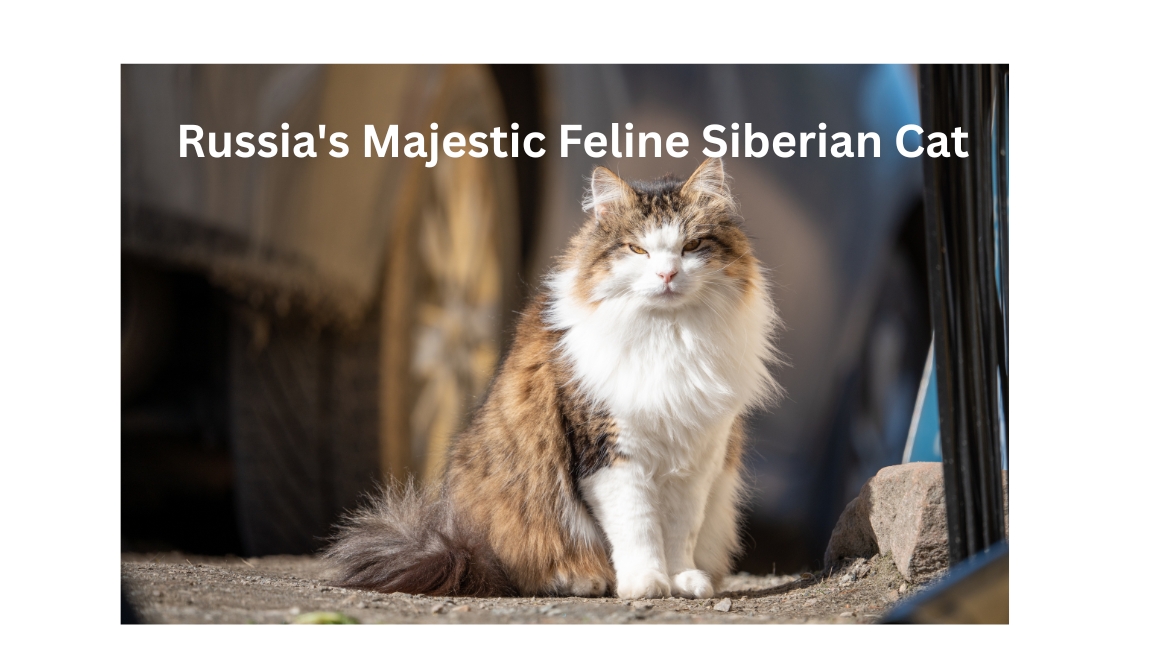
Siberian cat or the Siberian Forest cat is the national treasure of Russia and one of most interesting breeds of cats in the world. Their lavish triple coat, dog side character and being less allergic than other cats has won the hearts of people around the world.
The History and Origin of the Siberian Cat
The Siberian forest cat is at least 1,000 years old in the dense forest of Siberia and therefore one of the oldest natural breed of cats. These cats were the result of natural evolution and had to live in the extreme conditions of the Russian climate, so they were adapted to these conditions over centuries.
As per history, Siberian cats were referred to by Harrison Weir in a book he wrote in 1889 titled Our Cats and All About Them, in which he referred to the cats as Russian Long-haired cats.
Nevertheless, only after the dismantling of the Berlin wall in 1987 did these cats start to move outside of Russia. In 1990, the first Siberian kittens were brought to the United States, by a breeder called Elizabeth Terrell.
The Siberian cat breed today is accepted by all major cat registries such as TICA, CFA and FIFe. Some registries have sometimes recognized the colorpoint variant or Neva Masquerade as a separate breed.
Physical Appearances and Characteristics
Size and Build
Siberian cats are medium to large cats that have a strong and muscular body. Male weight averages 15- 20 pounds and female weighs 8-12 pounds. There are healthy males that can be up to 25 pounds. These are slow-growing cats and it takes up to 5 years to mature.
The Triple Coat
The most conspicuous thing about any Siberian cat is his great triple layered coat which is made up of:
- Guard hairs (straight and coarse)
- Awn hairs (thin and wavy)
- Heavy undercoat (woolly texture)
This is a waterproof coat that was meant to cover them during Siberian winters. The coat is made fuller and thicker in the cold months, and is narrowed in the summer months.
Colors and Patterns
Siberian cat colors have literally all the shades and types of color. The most universal one is brown tabby that has gray, black and white patches. Popular variations include:
- Black Siberian cat
- white siberian cat (possibly with blue eyes)
- Grey Siberian cat
- Orange Siberian cat
- Silver Siberian cat
- Patterns Seal point, blue lynch point and tortoiseshell
Distinctive Features
- Eyes Large, nearly round, and coloured between green and gold and copper
- Hearing: Medium size, rounded, and possibly with lynx-like tufts
- Paws: Big and cushiony and fur tufts between the toes
- Tail: Bushy and medium-length
- Head: Widened wedge tip shaped, soft contours
Comparison: Siberian vs. Norwegian Forest Cat vs. Maine Coon
| Feature | Siberian | Norwegian Forest Cat | Maine Coon |
| Origin | Russia | Norway | United States |
| Size | 12-18 lbs (males) | 13-22 lbs (males) | 15-25 lbs (males) |
| Coat | Triple layer, water-resistant | Double layer, water-repellent | Shaggy, uneven |
| Face Shape | Rounded wedge, sweet expression | Triangular, straight profile | Squared muzzle, high cheekbones |
| Personality | Playful, dog-like, affectionate | Independent, reserved | Gentle giant, sociable |
| Allergen Levels | Lower Fel d 1 in ~50% | Standard levels | Standard levels |
| Maturity | 5 years | 4-5 years | 3-4 years |
Siberian Cat Personality and Temperament
Dog-Like Companions
The qualities of Siberian cat character are mostly characterized as dog-like. Such cats often welcome their owners at the door, they follow their owners everywhere in the house and even may be trained to play. They are social, loving and they establish a strong relationship with their families.
Wit and Cunningness
These cats are very smart problem solvers and they do not shed off those kittenish actions even at maturity. Siberian cat traits include:
- Inquisitiveness and adventurousness
- Adoration of climbing and jumping into high places
- Playing puzzle toys and interactive games
- Learning tricks using clicker training
Vocal Nature
Siberians are not as vocal as the Siamese cats, but they use soft chirping, trills, and melodic purrs as a means of communication. They love talking to their humans and show their happiness in different ways with the help of different voices.
Family-Friendly
Siberian cats are good in the family set ups. They tolerate kids, they can get along with other pets such as dogs, and can adjust to new circumstances quite easily. Nevertheless, they do not like to be left behind during long periods and are seen to do well in homes where they have someone around.
Do Siberian Cats make good Pets?
The Truth About Allergens
The topic question is: are Siberian cats hypoallergenic? is often put, however, it must be answered with subtlety. Although there is no cat that is completely hypoallergenic, the Siberian cats do secrete much less fel d 1 protein-the major protein that causes cat allergy.
A study carried out by Siberian Research Inc. on more than 300 Siberian cats revealed that somewhere between half of them made significantly low levels of allergens compared to average domestic cats.
There were also some who were very low in terms of allergen levels, and thus suitable to a large number of allergy sufferers.
Important Considerations
- The level of hypoallergenic Siberian cat considerably differs among cats
- There is production of allergens during pregnancy and kittenhood
- Unneutered male cats are the producers of more allergens
- Spend time with a certain cat before adoption in case you are allergic
- There is no genetic assurance that a Siberian kitten would be low-allergen
Health and Lifespan
General Health
Siberian cats have been very healthy owing to their natural breed origins and less crossbreeding. They have a life expectancy average of 10-18 years which is low and some of them live to their early twenties.
Common Health Issues
Hypertrophic cardiomyopathy (HCM), an abnormality of the heart that is associated with thickening of heart muscle, is the major issue of Siberian cats. Respected breeders screen this condition by conducting an ultrasound test.
Additional possible problems are:
- Pyruvate kinase deficiency (congenital anemia)
- Locomotor conditions
- Reproductive medical issues
Frequent visits to a veterinary, screenings with renowned Siberian cat breeders are also assisting in making sure that your cat is healthy during its lifetime.
Grooming and Care
Coat Maintenance
Their long fur does not need much grooming since their hair does not tangle easily as compared to other long-haired breeds. Brush 1-2 times per week in regular times, and daily in season shedding (spring and fall).
Do Siberian cats shed? Yes they shed off twice a year. Brushing frequency should be amplified during such periods to ensure the reduction of hairballs and loose fur around your house.
Bathing
With their water-resistant coating and their innate affinity to water, a Siberian cat is easier to bathe than most animals. Nevertheless, they do not have to bathe very often because they observe a high level of cleanliness.
Dental and Nail Care
Keep the teeth clean and trim the nails. To keep their instinctive scratching nature happy and to prevent destruction of your furniture, give them a scratching post.
Feeding Your Siberian Cat
Siberian cats demand high protein based diets with high quality to maintain their muscular structure and high activity. Kittens enjoy lengthy spells on kitten food products, since they grow slowly at 4-5 years.
Nutritional Guidelines
- Select cat food that has been approved by AAFCO
- Give wet and dry food to keep him hydrated
- Measure portions of food 2-3 times per day
- Puzzle feeders can be used to stimulate their intelligence
- In order to avoid weight gain they can be overfeed
Royal Canin has breed specific Siberian cat food, but any quality and meat based diet will do well.
Training and Exercise
Physical Activity
Also, 20-30 minutes of active play every day are required of these athletic cats. They have strong hind legs that ensure that they are great jumpers and enjoy climbing cat trees and going up and down the vertical space.
Mental Stimulation
Siberian cats can open doors and cabinets. Provide:
- Interactive toys
- Puzzle feeders
- Training sessions
- Fetch games
- Rotating toy selection
Indoor vs. Outdoor
Although they are flexible to live in the house, Siberian house cats enjoy the availability of safe outdoor areas, such as catios. Their predatory instincts are still strong and they also like to watch the outdoors.
Finding a Siberian Cat
Siberian Cat Cost
How much is a Siberian cat? Reputable Siberian cat breeders sell their products at a price of between 1,000-4,000 dollars based on lineage, color and reputation of the breeder.
The cost of adoption is much lower at shelters (between 50 and 250 dollars) but Siberian cat rescuing will be hard to find since the breed is famous.
Choosing a Breeder
When you are in search of the Siberian kittens to purchase, you need to seek out breeders who:
- Registered with either TICA or CFA
- Test breeding cats for HCM
- Provision of health certificates
- Keep kittens until 12-13 weeks old
- Early socialization of kittens with humans
- Respond to inquiries regarding genes and ancestry
- Permit inspection of living conditions
What to Expect
The kittens in Siberia need to be left with their mother as long as possible (at least 13 weeks) to be properly socialized. When you enter your kitten at home, there will be the process of adjusting to the new environment.
Siberian Cat vs. Like Breeds
Norwegian Forest Cat
Comparison of Siberian cat and Norwegian Forest cat indicates some nuances:
- Head shape: round heads of Siberians; triangular of Norwegians
- Coat: Siberians Triple coats; Norwegians Double coats
- Personality: Siberians are more outgoing; Norwegians are more individual
- Ears: the ears used by Siberians are rounder and smaller
Maine Coon
Although they are both large, long haired breeds, Maine Coons are more angular in appearance and their muzzles are longer than the short haired muzzles of Siberians.
Living with a Siberian Cat
Ideal Home Environment
Siberian cats thrive in:
- Active families that interact quite often
- Houses containing kids and other pets
- Vertical climbing spaces
- Surrounds that do not keep them lonely all day
- Houses ready to mischievous action
Special Considerations
These cats are fond of water and they can even share your shower or even play in water bowls. They also have a reputation of being 90 percent placid, 10 percent mischief, which is to to be a few times naughty in between their otherwise calm nature.
Comparison Tables
Siberian Cat Quick Facts
| Characteristic | Details |
| Average Weight | Males: 15-20 lbs, Females: 8-12 lbs |
| Lifespan | 10-18 years |
| Coat Type | Triple-layered, semi-long |
| Hypoallergenic | Lower allergen production than most breeds |
| Temperament | Friendly, playful, intelligent |
| Maturity Age | 4-5 years |
| Grooming Needs | Moderate (1-2x weekly) |
| Activity Level | High |
Siberian Cat Nutrition Guide
| Life Stage | Daily Calories | Protein Requirement | Feeding Frequency |
| Kitten (0-1 year) | 200-250 | 30-35% | 3-4 times |
| Young Adult (1-5 years) | 300-350 | 26-30% | 2-3 times |
| Adult (5+ years) | 250-300 | 26-30% | 2 times |
| Senior (10+ years) | 200-250 | 26-30% | 2 times |
Conclusion
The Siberian cat is the embodiment of a wild and beautiful companion. They can be attractive with their beautiful looks, less allergic to the environment, and they act like dogs, so any of them is a great family member.
A Siberian cat can be a happy, laughing, and unconditional loving companion who will fill your home with happiness in the years to come with proper care, nutrition, and attention.
When you are ready to invite a Siberian kitten to your house, you should search the names of good breeders, furnish your house with climbing-structures and toys, and be ready to have an adventure with one of the most amazing cat breeds in the world.
Frequently Asked Questions
Q1: Are Siberian cats good pets?
Ans: Yes! The Siberian cats are great pets to families, singles, and other multi-pet households. They are loving, amiable and flexible with amiable personalities that would accommodate different living conditions.
Q2: How big do Siberian cats get?
Ans: Siberian cat adults weigh 15-20 pounds in males and 8-12 pounds in females. They mature gradually; and 4 or 5 years are the most common period to complete full maturity; hence they are found to be a slow maturing cat breed.
Q3: Do Siberian cats like to be held?
Ans: Most of the Siberian cats like being held and hugged, although different personalities differ. They are reputed to be loving and will do well to crave the lap time of their masters, yet they are not clingy.
Q4: Are Siberian cats rare?
Ans:The Siberian cats are not that common in other countries beyond Russia hence costing higher than the average domestic cats. But they become very popular since the 1990s and the serious breeders can be located all around the world.
Q5: Can Siberian cats be left alone?
Ans:Although Siberian cats can manage to keep to themselves during working hours, they do not like solitude and can get lonely after spending many of their time alone. They would be better placed in homes where there is a regular presence of somebody or living in multi-pet homes.
Q6: What is the best climate for Siberian cats?
Ans:Siberian cats with the aid of their triple coat, can withstand cold weather remarkably well. They are however easily adjusted to all kinds of temperatures and can grow in the interior environment irrespective of the climate.
Q7: Do Siberian cats have any behavior problems?
Ans:Siberian cats tend to be good-mannered, but since they are very clever and energetic, they can be mischievous when bored. They will be good model companions with little behavioral problems that come with proper stimulation.