

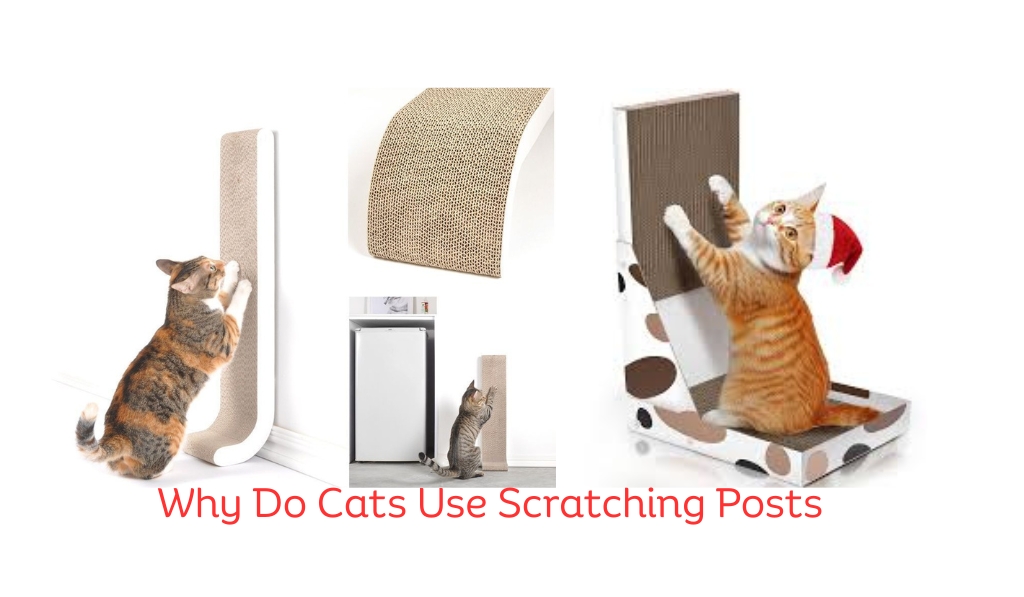
Cats Use Scratching Posts cannot be a cat accessory, but they are essential equipment which your cat needs in terms of both physical and psychological health. The knowledge of why cats need these tools will help you to choose the right tool, and conserve your furniture.
Natural Scratching Instincts of Behavior
Scratching is natural to cats as it is in their genes. Sharpening claws is a reflex process because it is a habit of natural predators, which is not limited to one purpose of maintaining the nail in good condition.
Claw Health and Maintenance
When your cat licks your face to demonstrate that he is stripping that dead outer sheath off his nails to reveal sharp and healthy nails underneath. This is a grooming exercise which is natural and which can prevent overgrowth of claws as well as in assisting to reduce infection. Suppose it is a snake shedding his skin it is a natural requirement which preserves the implements of hunting of your cat in good order.
Cambodia Stretching out the Body and Exercising
Cat scratching provides the cat with the necessary physical exercise. They get to full length each time they stand on a high scratching-post and cut the surface with their claws, and a full stretch of their muscles feels down their backs and round their hind legs.
This stretching maintains a certain degree of flexibility, muscle tone and loosening up of the joints of the indoor cat, which is essential since indoor cats lack much physical activity.
Communication and Marking Territory Marking
In scratching, the cats emit pheromones which are deposited in the pads of the paws using the scent glands. These are chemical signals that communicate territorial inference to other cats.
The visual sign of the scratches marks and the smell marks of the scent are nose level information and visible sign respectively. This is the form of dual-marking behavior that makes the cats scratch in elevated busy places other than in the dark corners.
Psychological De-stress and Emotional Release
The scratching is an activity that is emotional to cats. They can relieve their excitement, frustration, and anxiety, scratching the energy and tension is storing the energy and stress. Many cat owners will find that the cat scratching will be highly evident after the cat wakes up after a nap, after playing, and even when opening the door, and in all the situations, the cat is highly emotional.
The Right Way to choose the most successful Cat Scratcher
Scratching posts are not made similar. The right scratching post to be used by cats depends on the choice and the structure of the home used by the cat.
Features that will be regarded as being critical
Height is very important. At least 30-32 inches of your cat scratching post should reach the ceiling so that your cat would be able to stretch his body to the full length. Less than 3 feet, posts will be passed because cats cannot do the gratifying full length.
Stability is non-negotiable. Your cat will always run away on a shaky post. Search posts with wide and heavy bases that cannot be knocked over and cause excessive scratching. The heavier the post the more sure your cat will be using it.
A heavy base is solid and does not tip and makes your cat sure to scratch fiercely without the post wobbling and collapsing.
Material texture matters. The cats need the surfaces that their claws can literally sink into. The substance should offer resistance as well as offer reasonable action of shredding. Most cats prefer rough surfaces, to scratch tree barks, as they do in their wild environment.
The Materials People Scratch Their nails with most frequently
The best of those who study the behavior of cats are the sisal cloth. It is a hard and rough material, and can be scratched up and down. Sisal fabric has the ability to enable cats to scratch their nails easily and as a result, they get to enjoy the good scratching.
The sisal fabric provides unending satisfaction compared to sisal rope which forms bumps between layers.
Corrugated cardboard is also another good substitute especially in horizontal scratchers. Cardboard is good to scratch and cat paws are good to touch. The cardboard scratchers are not so durable like sisal but they are inexpensive and highly replaceable. Majority of them are cost-effective since they can be refilled.
There are those cats that react to carpeted posts particularly those cats that are already scratching carpeted areas. However, claws might become confused and lose their direction with the help of carpets. When wearing carpet, ensure that one uses rough textured carpets instead of soft and loopy carpets.
The closest experience that comes to outdoor scratching is natural wood. Other cats are most fond of bare wood or tree bark. Wooden scratchers are not common but are more preferable to the cats who require a more realistic adventure of a real-life outdoors. These scratchers give a natural feel that is very similar to what cats would feel on their natural environment.
Types of Cat Scratchers
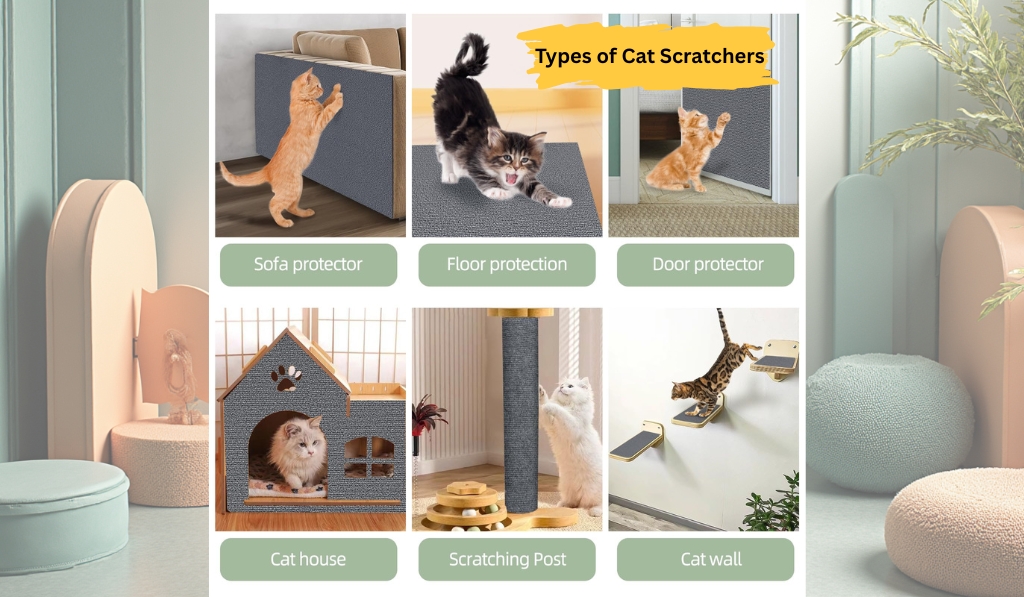
Vertical Scratching Posts
The old straight posts allow the cat to scratch on its feet on the post in its most natural posture the upward stretch. Best cat scratchers in this category are high designed and have huge bases. On the top, others have perches, which are also counted as scratching platforms and observation platforms.
Horizontal Scratchers
Cats which prefer to scratch on the floor are dealt with using flat scratchers. They are covered in cardboard and will be appropriate to the cats that attack carpets and rugs. Horizontal cat scratch pads are cheaper and they can be moved all over the house as they are portable.
Angled and Ramp Scratchers
The middle-ground is provided with inclined scratchers between vertical and horizontal. Ramps work well especially with older cats or cats with mobility issues because they can easily access them and although they can scratch effectively.
Cardboard Scratcher bed/lounger
Pedal scratchers which can also act as resting places will provide you with two functions of your cat. These scratchers not only enable the cats to scratch but it also gives them a place to settle down and hang around.
Most cats are fond of such combination items because it helps to fulfill their scratching instincts and their need to have a home. These loungers will be of different shapes such as hexagons, couches and wide flat which the cats will sit or lie down on.
Cardboard House Scratcher
Cat house scratchers offer a safe environment in which cats scratch and can rest. These scratchers are prevalent in large retailers and they are seasonally designed. They provide the cats with a safe place as well as fulfill their scratching behaviors. The enclosed design will attract the natural instinct of cats to be in den-like areas, it doubles up as a useful scratcher as well as a cozy zone.
Unique Shaped Scratchers
Cat scratchers are also designed in their peculiar shape and design. Round scratchers are effective as scratching surfaces and beds. Others have shape of fun openings or ornamental designs. These can be costlier than simple cardboard alternatives, but can help provide some visual appeal to your house.
But, think of the functionality scratchers, which are not tall enough to be stretched vertically, but also not entirely flat, may not be easily usable by cats to scratch, but may be used effectively by cats to rest.
Cat Trees and Towers
The cat trees can have multi-story cat scratching surfaces, cat climbing areas and rest platforms. These confined systems will be able to satisfy multiple needs of a cat simultaneously. Discover cat trees have interchangeable parts of their scratching and extend their lifespan.
There are also those cat trees that use sisal rope posts and might wear out and unglue over time and there are also those cat trees that have replaceable scratcher mats with velcro that is easily replaced and allow the item to be used longer.
Scratcher Furniture, functional
Contemporary cat furniture integrates the scratching area with useful household furniture. Scratch mats are attached to the end tables, benches have with-inbuilt scratchers and other furniture items have dual purposes. T
here may also be handy especially when located in strategic places close to furniture you wish to be safe, as a scratcher and scarecrow. Although cats may not be active scratchers, their presence by the vulnerable furniture can result in a shift in the scratching habit.
Cat Shelves with Scratchers
Cat shelves attached to the wall can have inbuilt scratching posts or mats which conserve maximum vertical space as well as offer scratching surfaces. These shelves enable cats to scratch, climb and view in high positions in a single installation.
Wall scratching posts will not occupy floor space and can be mounted at different heights to form climbing routes. Other systems have modular designs such that when components are scratched, it is possible to replace them.
Cat Scratcher Mat
Extra scroll mats provide a lot of space and flexibility in terms of scratching. These mats may be put on the floor and scratched horizontally or to the walls and scratched vertically. Scratching cats can be able to scratch on the walls using carpet scratchers or scratch mats, which do not need a tall post to do the same. They are space saving alternatives that can be used in a house with little floor space.
Making a good positioning is the difference
Place shall make or break your cat to his scratching post. Place scratchers in areas that the cat frequents much such as areas that are in a road, not corners.
- The most preferable places are closely placed since cats scratch immediately they rise.
- By windows allows the cats to confuse the act of scratching and watching the birds.
- The activity is diverted by adjacent furniture that they already have made scratches.
You may need a number of scratching places in your house in case you have more than one cat. Lack of enough can bring stress in competition and hence choice guarantees that there will be peace in the house.
Placing tips on Multi-Cat Placement
In case you have two or more cats, it is even more crucial to have placement with strategic scratchers. Keep scratchers in various rooms of your house to ensure that you are able to have easy access wherever your cats are.
There are several scratching options that prevent household competition of multiple cats and make all cats able to scratch without any dispute.
The minimum surfaces you should have in your house to scratch should be 3-4 according to the majority of cat behaviorists. This will avoid conflicts over territory and tension in multi-cat households. Put scratchers outside windows with cats and scratch them as the cats observe birds and outdoor activity. Place them next to the already existing furniture that cats scratch in order to distract them to the right surface.
Training a cat to scratching posts

Do not scratch your cat with your hands because you associate badness with it. Instead, encourage positive reinforcement through voluntary use.
Sprinkle with new catnip to attract curious character. Play with the wand objects in the posts, and stretch out your cat claws in the process of playing. The behavior can be reinforced immediately with the help of treats, praise or petting at any time upon using the post.
Lessen the appeal of undesirable scratching places by means of double-sided tape, aluminum foil or citrus smell. These demoralizing conditions work well with appealing alternatives in the nearby surroundings. Such a mixture of negative outputs on the undesirable surfaces and positive reinforcement of the desired scratchers will enable you to change the cat successfully.
Special Considerations
Prior to surgery: Senior Cats and Mobility Issues
Scratchers designed to suit old cats or old cats with walking difficulties can be used. Angled scratchers and ramps are easier to access and yet still allow it to scratch. These designs make the high postness less physically demanding and retain the stretching and claw maintenance advantages.
Multi-Cat Households
Houses that contain more than one cat need extra scratching spaces so that there is no competition and territorial strain. Make cats have at least one scratcher, and more in common areas. Cats could also have different types of scratchers that they prefer and hence variety will satisfy the taste of each cat.
Kittens
For kittens, small scratchers would be effective such as small ramps, and small posts they can reach easily. The taller scratching posts should be introduced progressively as the kittens grow taller and their needs of stretching grow.
Space-Saving Solutions
In homes with limited space, wall-mounted scratchers, furniture pieces that have built-in scratching areas or compact designs that work as multi-purpose should be considered. These alternatives offer required scratching surfaces without wasting appropriate floor space.
Table: Types of Cat Scratchers Comparison
| Type | Material | Best For | Durability | Price Range |
| Tall Vertical Post | Sisal Fabric | Full-body stretching, claw maintenance | High | $30-$80 |
| Horizontal Scratcher | Cardboard | Carpet scratchers, budget-conscious | Low-Medium | $10-$25 |
| Cat Tree | Mixed (Sisal, Carpet) | Multi-cat homes, combined activities | Medium-High | $50-$200+ |
| Angled Ramp | Cardboard | Seniors, kittens, variety seekers | Low-Medium | $15-$40 |
| Wall-Mounted | Sisal, Carpet | Space-saving, vertical territory | High | $25-$60 |
| Scratcher Bed/Lounger | Cardboard | Dual-purpose, lounging and scratching | Low-Medium | $15-$35 |
| House Scratcher | Cardboard | Enclosed spaces, hiding spots | Low-Medium | $20-$40 |
| Functional Furniture | Mixed | Home decor, furniture protection | Medium-High | $60-$150 |
| Cat Shelves | Sisal, Carpet | Wall systems, vertical space | High | $30-$100+ |
| Scratcher Mat | Carpet, Sisal | Large coverage, wall or floor | Medium | $20-$50 |
Frequently Asked Questions
Q1: Why does my cat scratch furniture, rather than their post?
Ans: Your cat should also have fun on furniture than on the post you are in. The post was either too short, or too shaky or not in the right place or even did not have a fine-looking surface.
Experiment Suppose that the same material as their scratching surface is used, and put a new post next to it, and do not forget to make sure that it is exactly the same material, tall, and solid enough to stretch.
Q2: What number of scratching posts are required?
Ans: Ensure that every cat has at least 1 scratching post and other post in other rooms. The other scratching options eliminate the multi-cat home rivalry and offer convenient accessibility anywhere that your cat spends his time. Most cat behaviorists say you ought to have a number of surfaces to scratch all about your house 3-4.
Q3: Better sisal rope or sisal fabric?
Ans: Sisal cloth is normally superior to the rope because the cloth can be scratched repeatedly. Rope separates layers in between which disturbs the scratching experience. Cats will prefer sisal fabric because it has smooth surfaces that they can pull their nails and thus it will be the best choice to their cats.
Q4: Will an older cat be trained to use a scratching post?
Ans: Absolutely! Though the kitten will learn faster, it is without a doubt that through patience and positive reinforcement the adult cats can be taught how to use scratching post. Install attractants like catnip, and post in areas where the favorite scratching sites are and reinforce appropriate scratching habit with treats or affection immediately.
Q5: Should I change the scratching post of my cat every so often?
Ans: Scratching posts can be changed, when the material used is too worn out to produce a good scratching. The average lifecycle of cardboard scratchers is 3-4 months and sisal cat scratching post is 1-2 years. Others are replaceable and have longer components in the market, and they save wastes.
Q6: Are the same scratchers used by the kittens as the adult cats?
Ans: Most adult scratchers can be used by kitten though smaller or lower ones are better at the start. Small ramps, compact horizontal scratchers and lower posts should be used with kittens. When they become bigger, add higher posts to their growing size and elongation needs. Presence of both kitten-sized and adult-sized scratcher is to make sure that accessibility is available in all stages of life.
Q7 : Why not use their expensive cat tree scratcher, cat?
Ans: Sisal rope post cat trees can cause issues in the near future. The rope may unglue or get torn into a lump mangled surface. The position of the posts on the trees is awkward or unstable to some cats.
Alternatives to rope-wrapped posts would be cat trees with removable scratcher mats or panels. Then make sure that the tree itself is stable and that it is in a place where your cat will be.
Q1: Do I need to purchase different materials in different rooms?
Ans: Providing variety in scratcher materials in your home allows cats to select favorites in their preferences, and has varied applications. Install sisal scratchers in primary living spaces to maintain serious claw, install cardboard scratchers in the spaces close to sleep to maintain morning stretches and install carpet scratchers in the spaces you want to protect. Various materials are offering different feel and fulfilling different scratching needs.