

Happiness in cats displays in specific patterns of behaviors, physical signs and relates to the interactions between cats and the environment. By understanding these signs why do cats wag their tails, owners of pets are able to determine and maximize the quality of life of their cat.
Feline Behavioral Contentment
The expression of the emotional state of happy cats is based on the regular behavior patterns that display psychological and physical health. Confident body language is also shown by a calm and confident feline that has smooth movements, loosened muscles and has a deliberate way of going around the environment.
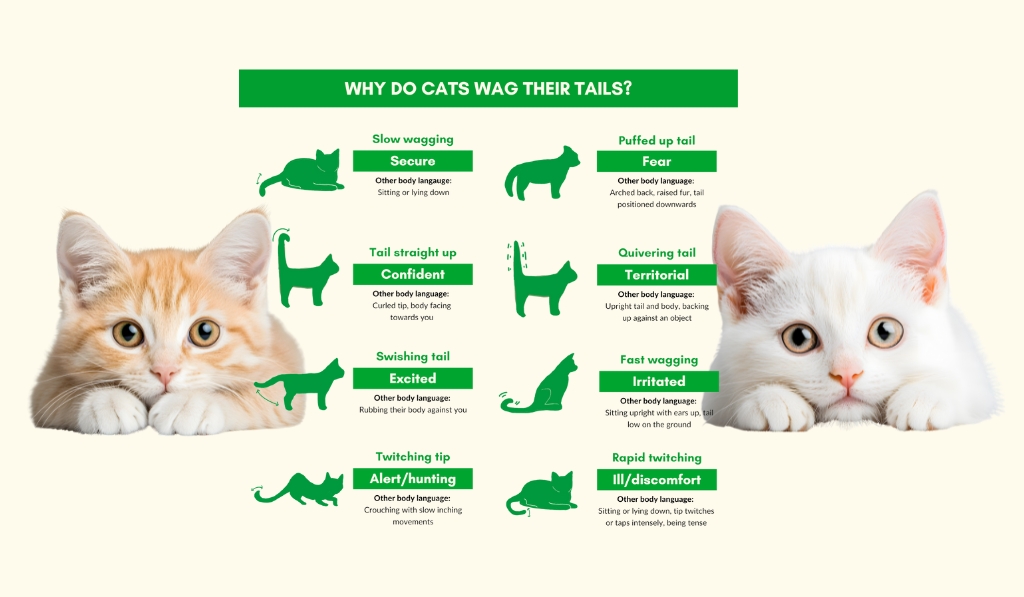
The tail positioning is one of the main indicators of emotional states of cats. A high tail that is curved or hooked mildly at the end represents confidence and satisfaction. Although cat movements with a waving tail may signify several feelings, smooth undulations normally signify interest and attention whereas the sudden hard and swift movements can suggest over-arousal or annoyance.
Eyes tell much about the emotional attitudes of cats. Satisfied cats take their time, blink slowly when forming eye contact with those who take care of them – something that can be construed as a gesture of affection. Trust and pleasure are indicated by partially closed but relaxed eyes during tactile intercourse.
This resultant positioning of the ears in the forward position and the muscle cover of the face gives what viewers refer to as a cat smiling expression, but this is muscular relaxation and is not to be taken as the similarity of expression to human smiling.
Vocalization of Content Felines
Happy cats express contentment through the use of real vocal repertoires. The most common vocalization is purring, but it is important to interpret it within the context, cats purr when they are fed, when they are being caressed, and when they are resting. Positive recognition and expectation are shown by the soft melodic vocalizations or chirping sounds when greeting someone.
Some cats secrete saliva when there is extreme pleasure in response. Why does my cat salivate when I stroke him? This is a physiological reaction where cats attain deep relaxation conditions and this activates the parasympathetic nervous system which reminds of the nursing behavior in kittens. This is a reaction of extreme comfort and safety.
One vocalization that is a form of greeting behavior and contentment is trilling, a type of vocalization that combines meowing and purring. The pattern of vocalization, which was first employed by mother cats addressing offspring, can be applied to adult intercat communication with favorite human beings and companion animals.
Physical Measures of Indoor Cat Health
Indications of a contented domestic cat are the upholding of positive nutritional practices and routine eating schedules. A starving cat would go to the table with the right amount of enthusiasm, show food interest without showing anxieties or aggressiveness. Frequent grooming that causes the coat to be in good condition is a sign of physical and emotional health.
The presence of play behaviors of any age is an indicator of psychological satisfaction. Active cats are present at the program of regular activities, showing their interest in the environmental factors and in the possibility of interaction. They also demonstrate spontaneous hunting behaviors such as stalking, pouncing, and simulation of prey that not only offer cognitive stimulation but also exercise.
A stressed cat has species typical sleep behaviors of 12-16 hours a day in a variety of comfortable positions. Ventrally exposed dorsal recumbency is a sign of ultimate trust, but this posture does not always represent accessibility to abdominal contact. The choice of sleeping places by cats near to their caregivers or in places where there is a lot of traffic in their houses also indicates confidence as well as safety of the environment.
The Determinants of Feline Happiness Environmentally
Providing an enriched environment is correlated with happiness in cats. Optimal conditions include:
- Vertical access to the territory by means of raised platforms to rest and climbing structures.
- Proper surfaces to scratch and mark out territory.
- Safe areas of retreat, which guarantee privacy and security.
- Thought provoking devices such as puzzle feeders and interactive toys.
- Opportunities of visual stimulation like window perches where there is observation of the environment.
Mental stimulation due to complexity of the environment averts behavioral issues that are characterized by understimulation. Cognitive sustainability is achieved through rotating enrichment materials and having challenges that are species-specific. Sincere attention to the needs of comfort is reflected even in such considerations as the right temperature regulation, sometimes a cat in a sweater in cold weather.
The Interaction Patterns that show Satisfaction in the social life
Cats which are contented start to interact on individual preference schedules. The banging of forehead against human limbs known as head bunting aids in scent exchange and social connection in their perceived family group. Kneading behavior with front paws is a copy of nursing behavior, and signals a deep level of relaxation as well as affection.
The fond relationships between cats and kisses arise as felines repeat the relationship by choice to be close to their caretakers. Happy cats can also trail members of a family through rooms, be close to them in their activities, or sleep in areas close to their favorite people. Such a proximity-seeking behavior is an indication of attachment and security.
Some cats show affection by means of soft mouth to mouth contact-soft pressure touching without tissue damage. This is not similar to aggressive biting and merely playful affection, or allogrooming, of their human companions.
Assessment Techniques: How to establish Feline Happiness
To know whether your cat is happy or not, you will have to follow a systematic observation of its daily behavioral patterns. Content cats consistently:
- Show eagerness in greeting behavior with the familiar members of the household.
- Always keep circadian rhythms regular and in keeping with the household activity patterns.
- Use elimination facilities with no unsuitable elimination.
- Show proper appetite without hyperphagia or food refusal.
- Maintain grooming of self without being overly or obsessively concerned.
The reason my cat wants proximity? Social bond and environment security is denoted by voluntary spatial proximity. Even technically independent cats choose common places with favored people, irrespective of the extent of interaction.
Awareness of Reduced Well-Being
Determination of contentment-distress changes ensures the highest welfare. Reduced grooming, eating habits, augmented hiding, or swift aggression are reasons to seek professional veterinary care. The question “Is my cat happy?” becomes critical when the behavioral changes appear suddenly.
Over vocalization especially at night could be a sign of pain, cognitive impairment of geriatric cats, or lack of environmental stimulation. Destructive scratching that goes beyond what is considered normal as territorial marking indicates psychological stress or the lack of proper outlets that are appropriate.
Strategies for Optimizing Feline Happiness
To foster human-feline relationships, the individual personality differences should be taken into consideration. Other cats are those that like constant contact and others like to be on their own. Appreciation of these preferences will avoid stress accumulation and establish trust relationships.
Regular feeding routines, clean toilets, constant access to fresh water and preventive medical care form the baseline. In addition to physiological needs, emotional satisfaction by organized play, training possibilities, and good communication is an ultimate satisfaction in the long term.
Multi-cat households have to be provided with sufficient resource allocation: several elimination areas, feeding areas, and resting areas to avoid stresses of competition. Even mutlu kedi (Turkish words happy cat) in multi-pet settings would need customized care and access to resources.
Specific Happiness Indicators at Life Stage
The activities that are indicative of kitten satisfaction include active play, assertive exploration and quick learning. In the course of mastering hunting skills, adolescent cats challenge environmental limits by playing alongside hunting games. Adult cats have regular schedules, which they are happy with, as they show their contentment with regular behavioral patterns.
Older cats exhibit a change in expression- there may be reduction in their activity with a more loving companion. The correct assessment criteria adaptation to age-related behaviors should make feline lifespan assessment accurate.
Behavioural Category
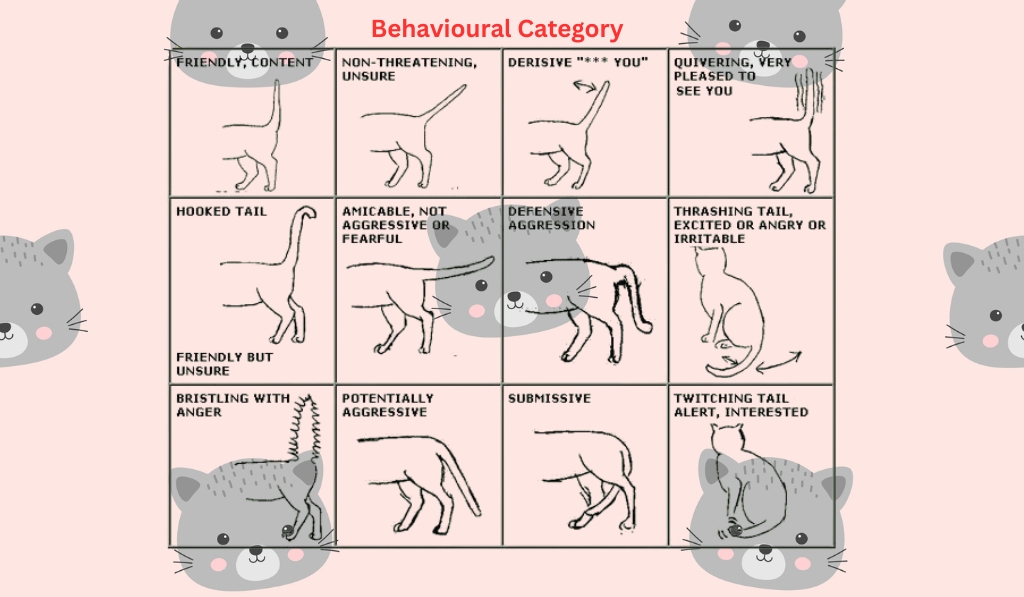
| Behavioural Category | Content Cat Indicators | Distressed Cat Indicators |
| Tail Position | Elevated with gentle curve | Tucked ventrally or thrashing |
| Ear Position | Forward or laterally oriented | Flattened against cranium |
| Ocular Expression | Slow blinking, relaxed | Dilated pupils, contact avoidance |
| Body Posture | Relaxed musculature, fluid movement | Tense, hunched, or concealment |
| Vocalisation | Soft meows, purring, trilling | Hissing, growling, excessive vocalisation |
Daily Activity Pattern
| Daily Activity Pattern | Content Cat | Stressed Cat |
| Grooming Behavior | Regular, thorough maintenance | Excessive or neglected |
| Nutritional Intake | Consistent, appropriate volume | Food refusal or hyperphagia |
| Play Engagement | Regular, appropriately enthusiastic | Disinterest or excessive aggression |
| Social Behavior | Proximity-seeking | Excessive concealment or clinginess |
| Rest Patterns | 12-16 hours, varied positions | Restlessness or excessive sleep |
Frequently Asked Questions
How do I properly know whether my cat is contented?
The systematic monitoring of body language, vocalization and daily behavioral patterns offers good evaluation. Happy cats have relaxed posture, high tail, regular play behavior, normal grooming and voluntary interaction with other members of the house. Constant nutritional habits and comfortable resting postures at different places also point the well being.
So what is the determinant of tail movement variation among cats?
The tail movements in cats convey emotional states depending on the characteristics of movements. Light lateral sway shows satisfaction in the observation of the environment. Quick, harsh movements are indicative of irritation or overload of the senses. A slightly apical tremor and raised tail indicate excitement and good mood of the animal especially during greeting patterns.
What are the special hints that indicate a successful indoor cat?
Healthy indoor cats exhibit ideal health by regularly playing, eating, self-grooming, sleeping posture, and willingly interacting with the members of the household. It is also good to use scratching surfaces where they would be appropriate, good exploration of their environment and good reactions to interactive play activities are even greater indicators of thriving conditions.
How does your body respond to petting with salivation?
When cats attain deeper relaxation, salivation during the process of tactile stimulation results. This reaction repeats feelings of comfort in relation to nursing behavior in kittenhood. Strong pleasure sends the responses of the parasympathetic nervous system, sometimes causing salivation to the degree of mild. This is a major sign of safety and satisfaction.
How can cats be maximally happy through evidence?
To improve the welfare of cats, environmental enrichment should be done extensively with vertical structures, proper scratching surfaces, challenging cognitive problem solving and provision of visual stimuli. Ensure regular feeding schedules, elimination facilities hygiene and preventive veterinary schedules. Plan periodical and playful activities in the day and take care of personal temperament differences when it comes to physical contact and the level of social interaction.