

Knowing how to trim cat nails at home will keep your pet cat both comfortable, preserve your furniture and avoid painful health conditions. This manual has all you need to make the process of trimming nails safe and stress free.
Reasons Why Cat Nails Trimming is Important
The indoor cats require their nails to be trimmed since they do not have the natural sources to trim them. Whereas you find outdoor cats climbing the trees and scratching rough surfaces, indoor cats will be relying on you to take care of their nails.
Growing cat claws are serious issues. Long nails can twist and scratch paw pads leading to infections and movement complications. They also get trapped on carpets and furniture where they might tear and bleed. Frequent haircuts save the health of your cat and your property as well.
Frequency of Cat nail Trimming
Majority of indoor cats require their nails to be clipped after every 2-4 weeks. Kittens have to be trimmed every week since they grow more faster, and others have to be taken care of monthly.
Nail Trimming Frequency Guide
| Cat Type | Recommended Frequency | Special Notes |
| Kittens | Every 1-2 weeks | Fast growth; early training essential |
| Active Indoor Cats | Every 3-4 weeks | Regular scratching post use helps |
| Sedentary Indoor Cats | Every 2-3 weeks | Less natural wear needs more care |
| Senior Cats | Every 2-3 weeks | Thicker nails, reduced activity |
| Outdoor Cats | Every 2-3 months | Natural wear from outdoor surfaces |
Signs your cat’s nails need trimming:
- audible clicking on floors
- visible claws when paws are relaxed
- catching on fabrics
- nails curving toward paw pads
Essential Cat Nail Trimming Tools
Proper equipment makes the process easier and safer.
Types of Cat Nail Trimmers
- Scissors-Style Clippers: Resemble small scissors with curved notches. Most groomers prefer these for cats due to excellent control and visibility.
- Guillotine-Style Clippers: Feature a hole for the nail before cutting. These stay sharp longer but can be trickier to position.
- Pliers-Style Clippers: Spring-loaded design for thick nails, though typically better suited for dogs.
Can you use human nail clippers on cats? Yes, though cat-specific nail clippers provide better results. Choose whichever feels most comfortable.
Cat Nail Clipper Comparison
| Clipper Type | Best For | Pros | Cons |
| Scissors-Style | Most cats, beginners | Great visibility, precise | Needs sharpening |
| Guillotine-Style | Experienced owners | Stays sharp, clean cuts | Limited visibility |
| Human Clippers | Emergency use | Readily available | Less precision |
The styptic powder or cornstarch should also be kept handy in case you cut through the quick. Expensive snacks bring about favourable memories.
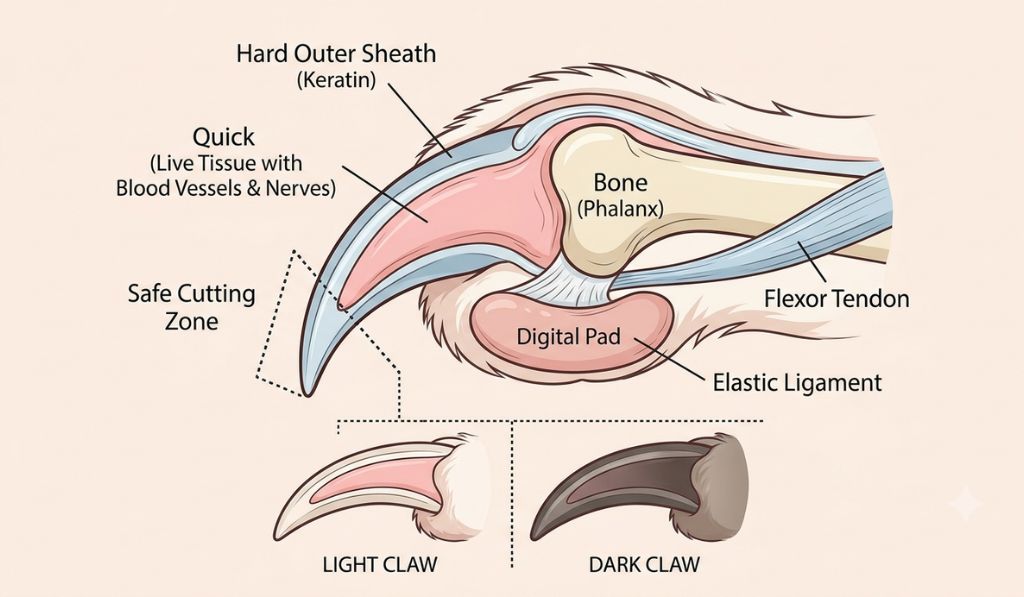
Categorising the Cat Nail Anatomy
The outer sheath of every claw is hard and the quick, or pink central part containing blood vessels and nerves. In light-coloured nails the quick in is pink in colour. Do not cut it into it, for it is painful and blooded.
Trim in the nail where it curves downwards, with dark nails where you cannot see the quick. There is a total of 18 nails on cats, five on their front paws (with dewclaws) and four on their back.
Step-By-Step: The Best Way to Trim Cat Nails
Preparation
Select a room that is not distraction-oriented. Name: trim when your cat is relaxed, it is best after eating or when drowsy. Prepare your cat nail trimmer, your treats and styptic powder.
Positioning Your Cat
These are the strategies that you can use, depending on the temperament of your cat:
- Seat your cat across your lap
- Use a cushion such as an ironing board
- Sitting between your legs
- In the case of squirmy cats, wrap them in a towel in the form of a burrito
The key is minimal restraint. Lots of cats are stubborn when it comes to being held and not being trimmed.
The Trimming Technique
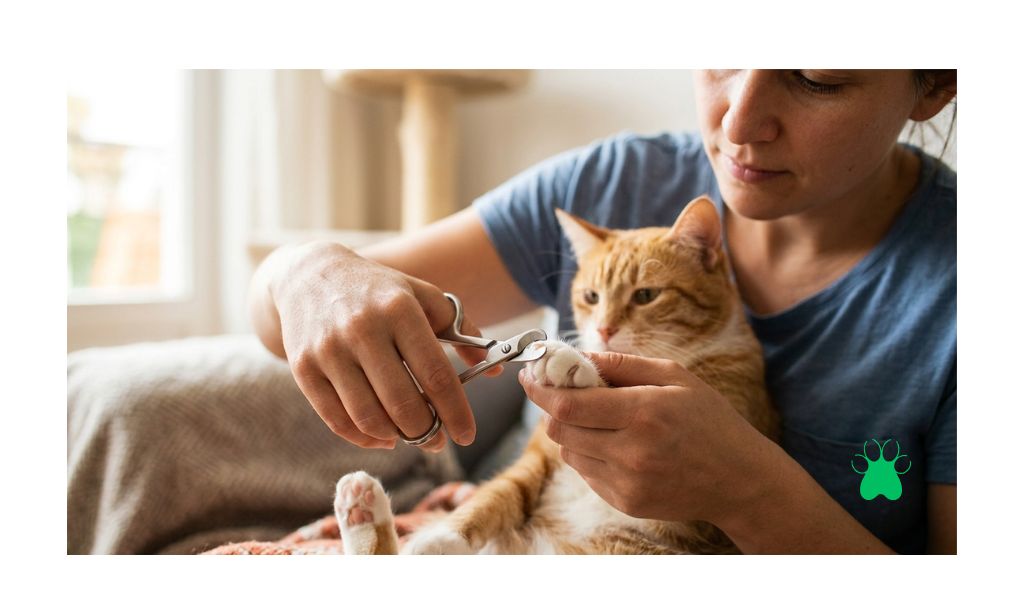
To open the retractable claw, use your thumb and forefinger to press the toe pad. Install position clipper blades at 45 degree angle instead of at right angles.
Carefully only the sharp white tip is trimmed without touching the pink quick. Exert pressure at the top to the bottom, in order to reduce splitting. Cut little cuts, you may cut them down after ward.
Do each nail, one at a time. When your cat exhibits stress (twitching of the tail, growling) you should stop and restart later.
What If You Cut the Quick?
When you trim those nails of your cat and it is bleeding, remain calm. Use a clean cloth to press softly all over the nail tip. Wipe the bleeding nail on styptic powder, cornstarch or on soap.
The bleeding normally ceases in minutes. Veterinarian contact is necessary in case of continued duration of over 10 minutes.
How to Train Cats to Get Nails Clipped
Begin when they are kittens though it is always late.
Gradual Approach
Start with frequent petting of paws. Massage toe pads (do not trim them), and then reward with a treat. When relaxed, practice stretching out single nails using pads.
Insert clippers step wise. Allow your cat to scent them, exercise holding around paws. Cut uncooked spaghetti to make your cat used to it.
Do not trim to the full first. Begin and end with one or two nails, use treats and end on an up-note. You can slowly build up until your cat is used to you.
How to Trim without Making the Common Errors
- Editing: Better be safe than sorry. Several minor incisions tormented a single overwrought excision.
- With Dull Clippers: Clean cuts are made with sharp blades. Nail-crushing dull ones are painful and may cause infection.
- Forcing the Process: Forcing agitated cats does not facilitate subsequent (future) sessions. Stop if stressed.
- Overlook of Dewclaws: These are the upper inner nails that require frequent care.
Dealing with Difficult Cats
- Stealth Trimming: Trim as your cat sleeps. You may have only one or two of your nails, but all nails are good.
- Two-Person Distract-er: Have someone bring something to eat and distract you, as you trim.
- Professional Assistance: There is no need to be afraid to visit veterinary or grooming. Large numbers of vets have fast nail trimming services.
In the case of really anxious cats, the veterinarians may prescribe some relaxing drugs.
Conclusion
Learning to cut cat nails keeps your cat healthy and secures your relationship. Even the most stubborn cats can be trained to bear the grooming sessions with the help of the appropriate tools, technique, and time.
Begin small, pay handsomely and do not coerce it. Should it be too hard to trim, the services of a professional can see your cat get the much needed attention as you train at home.
FAQs About Cat Nail Trimming
Q: Do cats’ claws need to be trimmed?
The indoor cats, older ones, and less active cats should be trimmed 2-4 times in a month. Outdoor cats are known to keep their nails in their natural state by climbing and scratching.
Q: Is clipping cats’ claws cruel?
No, it is imperative health care to keep the cat nails trimmed. What is mean is letting nails grow and curl up to paw pads, which results in infections.
Q: Should you cut cat nails?
Yes, the majority of indoor cats are prone to regular trims. It avoids overgrowth, keeps furniture safe and keeps your cat in a comfortable state.
Q: How do you cut cat nails if they won’t let you?
Gradual desensitization using treats, trim one nail at a time at first, or get professional assistance of groomers or veterinarians.
Q: What happens if you don’t trim your cat’s nails?
Unattended nails grow excessive and bent which may end up in growth into pads of the paw leading to painful infections, movement difficulties, and ripped nails.
Q: Can I use regular nail clippers on my cat?
Yes, the human nail clippers can be used on cats, but the cat-specific nail clippers are more controlling. Use different clippers to clean oneself.
Q: How often should I cut my cat’s nails?
Majority of indoor cats will require trimming after every 2-4 weeks. Weekly trims could be necessary with kittens but outdoor cats need less maintenance.